10 Energy Storage Capacitor Buying Tips?
Choosing an Energy Storage Capacitor is not simply a matter of comparing capacitance values. Engineers must examine voltage stability, equivalent series resistance, ripple-current tolerance, temperature range, cycle life, and supplier documentation. A component rated at 500 volts may not deliver that performance continuously, especially inside a hot cabinet with limited airflow. Small details matter.
Dr. John R. Miller, a recognized ultracapacitor researcher and industry consultant, has said, “Energy storage is a power problem before it is a capacity problem.” This practical view gives buyers a useful starting point. A capacitor may store enough energy, yet still fail when rapid discharge, repeated pulses, or strict voltage limits affect the application. The right choice depends on the complete operating profile.
The following ten buying tips examine those hidden decisions. They connect laboratory data with real installation conditions, including bus voltage, inrush current, enclosure temperature, maintenance access, and end-of-life behavior. Check the datasheet carefully. Ask difficult questions. Request test evidence, not only marketing claims. In field evaluations, I have seen attractive specifications become disappointing results after poor derating or weak thermal design. That mistake is easy to make. It is also avoidable.
Some recommendations may appear conservative. They are. A little conservatism can protect costly power electronics and reduce unexpected downtime. Still, no buying guide replaces application testing. Measure the actual load, compare competing designs, and allow room for uncertainty before approving an Energy Storage Capacitor for production.
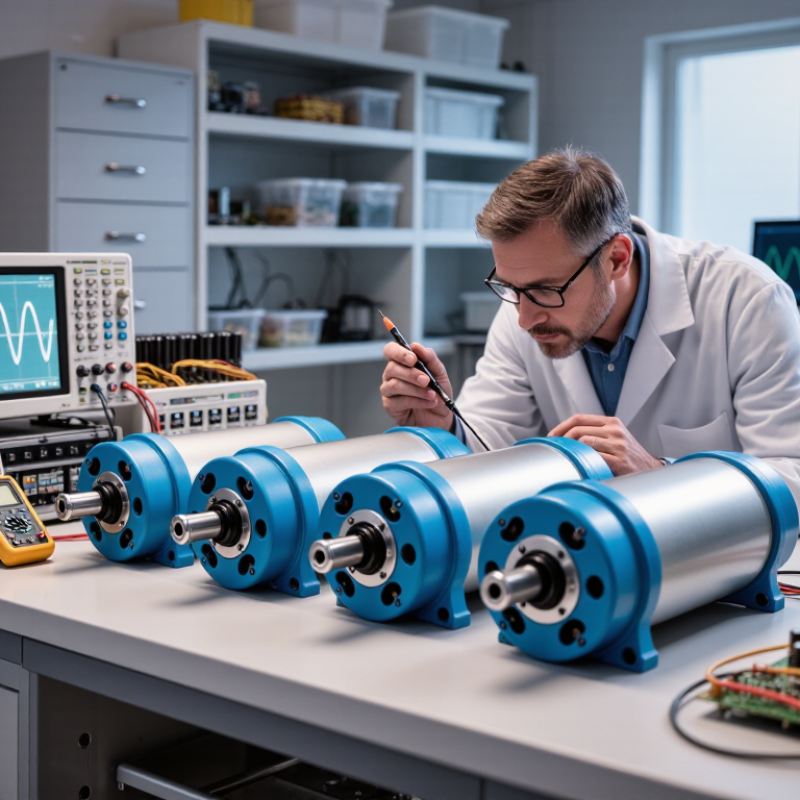
Define the Application: Energy, Power, Voltage, and 1/2CV² Requirements
Before buying an energy storage capacitor, define the load profile. Is the circuit storing energy, delivering a power pulse, or both? The U.S. Department of Energy’s Energy Storage Grand Challenge materials report that electrochemical capacitors can provide power densities above 10 kW/kg, while their energy density is commonly below 10 Wh/kg. That difference matters. A capacitor may restart a motor effectively, yet fail during a long backup interval.
Calculate the required energy with E = 1/2CV², where E is joules, C is farads, and V is volts. For example, storing 500 joules at 50 volts requires about 0.4 farads under ideal conditions. Real systems need margin. Usable energy falls when the minimum operating voltage rises. It also falls with temperature, aging, equivalent series resistance, and voltage derating. I sometimes see designs use the rated voltage as the operating voltage. That is convenient, but not careful engineering.
Measure the pulse duration and peak current, then check ESR and ripple-current ratings in the datasheet. IEC 62391-1 provides a useful reference for fixed electric double-layer capacitors. Industry qualification reports also emphasize leakage current and thermal behavior during repeated cycling. A low ESR improves power delivery, but it can increase inrush current. Add current limiting when necessary. The calculation is simple. The assumptions are not.
Compare Ratings: 2.7 V EDLC Cells, Capacitance, Tolerance, and Ripple Current
When buying a 2.7 V EDLC cell, treat voltage as a working limit, not a target. A single cell rated at 2.7 V needs a controlled charger and voltage margin. The U.S. Department of Energy’s Energy Storage Grand Challenge Roadmap (2020) reports that supercapacitors can deliver over 100,000 cycles, but excessive voltage and heat reduce that advantage. In real designs, temperature matters.
Capacitance is only one comparison point. Check the rated capacitance, tolerance, ESR, leakage current, and test temperature. A cell marked 100 F with ±20% tolerance may measure between 80 F and 120 F. That difference changes backup time. IEC 62391-1 defines measurement conditions for fixed electric double-layer capacitors, helping buyers compare laboratory results more reliably. Do not compare values measured at different frequencies or temperatures.
Ripple current deserves careful attention. Use the manufacturer’s RMS limit, then calculate heat with P = I²R. A small ESR increase can create noticeable heating during repeated pulses. The DOE roadmap identifies high power density as a major supercapacitor strength, yet power ratings are not always continuous ratings. Test a complete module, not only one cell. Balance circuits also consume current. An elegant spreadsheet can still mislead. I would leave margin for aging, uneven cell leakage, and imperfect thermal airflow. Conservative sizing often costs less than replacing a swollen capacitor bank.
Verify Safety and Standards: IEC 62391, AEC-Q200, Thermal, and Balancing Needs
When buying an energy storage capacitor, verify the applicable standard before comparing capacitance or price. IEC 62391-1 covers fixed electric double-layer capacitors and defines key tests for electrical performance, endurance, and safety. Request test conditions, not just a compliance logo. Confirm rated voltage, leakage current, ripple current, and maximum temperature.
Automotive applications require stricter evidence. AEC-Q200 qualification evaluates passive components through temperature cycling, damp heat, mechanical stress, and electrical endurance. The qualification does not automatically prove suitability for every vehicle design. Check the exact part family and test grades.
The International Energy Agency reported over 17 million electric cars were sold globally in 2024, increasing pressure on compact, reliable power components. Thermal margins matter more now.
Measure heat at the capacitor case and nearby busbar. A few extra degrees can accelerate aging, especially under repeated high-current pulses. DOE’s Energy Storage Grand Challenge identifies safety, reliability, and lifecycle performance as core storage priorities. Use its logic during vendor review.
Parallel capacitors also need balancing because small leakage differences can create unequal voltage sharing. Passive resistors may waste energy; active balancing adds complexity. I have seen designs pass bench tests yet drift during long cycling. That failure is easy to underestimate. Leave voltage and temperature headroom, document the balancing method, and repeat tests under real duty cycles.
Calculate Ownership Cost: 10-Year Life, 80–95% Efficiency, and Replacement Risk
An energy storage capacitor can look inexpensive when judged by its purchase price. Ownership cost tells a different story. Industry assessments cited by the U.S. Department of Energy place practical round-trip efficiency for many storage systems near 80–95% (Energy Storage Grand Challenge Roadmap, 2020). A 90% system still loses 10% of every stored kilowatt-hour. At 300 kWh daily, an electricity price of $0.12 per kWh creates about $13,140 in energy losses over ten years. That figure excludes cooling, controls, wiring, and maintenance.
Check the rated life under your actual temperature and discharge profile. The IEA notes that operating conditions strongly influence storage performance and degradation (Batteries and Secure Energy Transitions, 2024). Capacitors may tolerate frequent cycling, but heat can accelerate aging. Ask for measured efficiency at partial load, not only the best laboratory result. Small differences matter. A 95% system loses roughly half as much energy as an 80% system during repeated cycling.
Replacement risk deserves a separate line in the spreadsheet. NREL’s Storage Futures Study emphasizes that technology costs and performance assumptions can change across project life (2022). Include a replacement scenario in year six or seven, plus labor and downtime. My first ownership model ignored controls and installation. It looked precise, but it was incomplete. Request warranty terms, test conditions, expected capacity retention, and service availability in writing. Also compare disposal costs, because the cheapest purchase can become an expensive interruption.