| Adjustable Dumbbells | Strength training, upper-body exercises, unilateral movements, and full-body workouts. | Selectable weight settings, compact storage, knurled or textured handles, and rapid weight changes. Many home models cover approximately 2–24 kg per dumbbell. | Approximately 35–45 cm long per dumbbell, depending on the selected weight. | About 2–3 m², including room to stand, sit, and move safely. | Generally suitable for one user at a time. | Apartment users, beginners, travelers, and people seeking versatile resistance training in a small space. | Check locking mechanisms, handle comfort, maximum weight, and whether the adjustment system remains stable during dynamic movements. | Excellent |
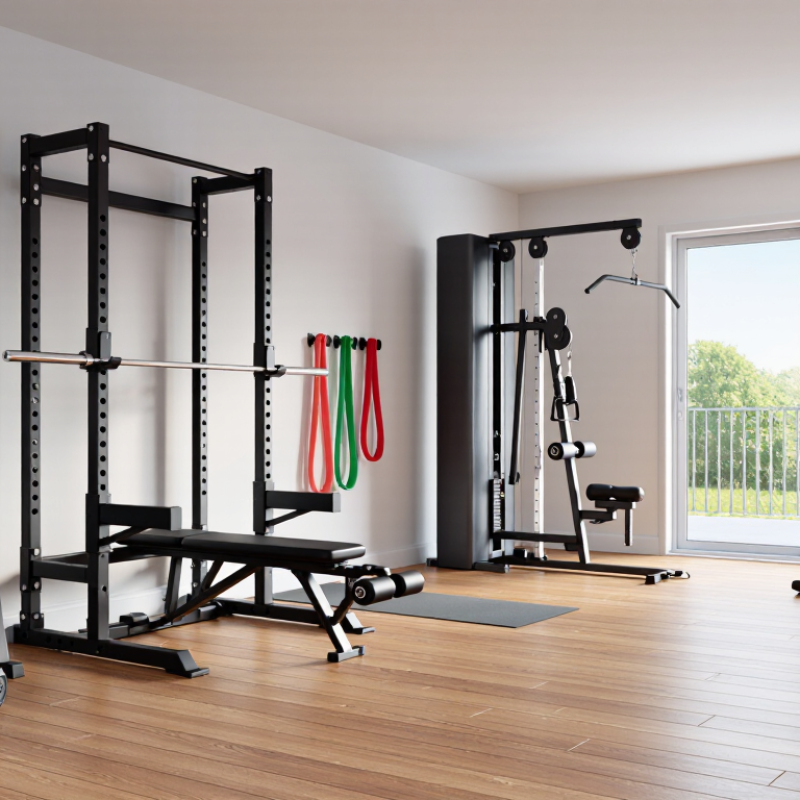
| Adjustable Weight Bench | Pressing, rowing, seated exercises, abdominal work, and support for dumbbell training. | Multiple backrest angles, adjustable seat positions, padded upholstery, stable feet, and sometimes a foldable frame. A flat-to-incline range is useful for varied workouts. | Approximately 120–145 cm long, 45–75 cm wide, and 40–55 cm high. | About 3–4 m², with additional clearance around both sides and the head of the bench. | Commonly designed for users up to 120–300 kg, including body weight and lifted load; verify the tested limit. | Users combining dumbbells, resistance bands, and body-weight exercises. | Look for a wide base, secure adjustment pins, minimal wobble, durable upholstery, and a clearly stated total weight capacity. | Very Good |
| Power Rack | Barbell squats, bench presses, overhead presses, rack pulls, and progressive strength training. | Four-post frame, adjustable bar supports, safety arms or straps, pull-up bar, and optional attachment points. It provides a safer structure for heavy barbell work. | Approximately 120–150 cm long, 120–150 cm wide, and 210–240 cm high. | At least 7–10 m², including barbell loading space and a safe lifting perimeter. | Typically one active user; commercial-style frames may support higher loads than compact home versions. | Experienced lifters, strength-focused households, and users planning long-term progressive overload. | Confirm ceiling height, frame stability, anchoring requirements, maximum rack load, and compatibility with locally available barbell lengths. | Moderate |
| Cable Crossover Machine | Full-body resistance training, functional movements, isolation exercises, and rehabilitation-style training. | Two adjustable pulley columns, weight stacks or plate-loaded resistance, multiple cable heights, and a broad exercise range for arms, chest, back, shoulders, hips, and legs. | Approximately 150–220 cm long, 80–120 cm wide, and 200–230 cm high. | About 8–12 m², allowing the cables to extend fully and providing clearance for handles and accessories. | Usually one or two users, depending on the frame design and whether both pulley stations can be used independently. | Families, personal trainers, users wanting varied resistance exercises, and people with joint-friendly training preferences. | Check pulley smoothness, cable routing, stack increments, frame anchoring, noise level, and the available ceiling height. | Moderate |
| Magnetic Rowing Machine | Low-impact cardiovascular conditioning, posterior-chain strength, and full-body endurance training. | Sliding seat, foot straps, handle with ergonomic grip, adjustable resistance, performance monitor, and often a foldable or upright storage position. | Approximately 200–220 cm long, 45–60 cm wide, and 75–115 cm high. | About 5–7 m² during use; allow extra vertical or wall space if the machine is stored upright. | Many home units support users up to approximately 120–150 kg; taller users should check rail length. | Users seeking efficient cardiovascular exercise with lower impact than running, including beginners and endurance athletes. | Evaluate rail length, seat travel, foot size range, monitor readability, resistance consistency, and transport wheels. | Good |
| Folding Treadmill | Walking, jogging, interval training, and indoor running. | Motor-driven belt, speed controls, incline options, shock-reducing deck, emergency stop system, display console, and folding deck for storage. | Approximately 165–200 cm long, 75–90 cm wide, and 135–150 cm high when unfolded. | About 6–9 m², with clearance behind the deck and on both sides for safe mounting and dismounting. | Commonly supports approximately 100–150 kg, depending on the motor, frame, and intended use. | Walkers, runners, users living in areas with poor weather, and households wanting predictable indoor cardio. | Check motor rating, belt dimensions, maximum speed, incline range, noise, voltage compatibility, and whether the folded unit can be moved safely. | Good |
| Indoor Cycling Bike | Cardiovascular conditioning, interval cycling, endurance training, and lower-body fitness. | Adjustable saddle and handlebars, weighted flywheel or magnetic resistance, caged or clip-compatible pedals, transport wheels, and basic performance tracking. | Approximately 105–130 cm long, 50–65 cm wide, and 105–125 cm high. | About 3–5 m², including space to mount, dismount, and adjust the handlebars and seat. | Many models support users up to approximately 110–150 kg. | Users wanting a compact cardio option, cyclists, beginners, and people who prefer lower-impact exercise than running. | Inspect frame stability, adjustment range, pedal type, resistance control, saddle comfort, flywheel protection, and required power or connectivity. | Very Good |