
If you are interested in financing to fund your Bay-Lynx purchase, we recommend that you connect with Easylease Corp., a Canadian-based leasing and finance company that offers premier equipment leasing and financial services. They are focused on making it easier than ever before for companies to overcome cash flow and resource constraints to acquire the assets they need to grow their business.
Leasing through Easylease Corp. can offer several benefits:
Click here for your Canadian instant lease quote >>
For US customers, Click here for your instant lease application >>
The Aluminum Investment Casting process is a specialized method used in manufacturing intricate metal components. According to industry expert Dr. James Reynolds, “Aluminum Investment Casting provides unparalleled precision and design flexibility.” This method excels in producing parts that require tight tolerances and complex geometries.
Many industries rely on the benefits of Aluminum Investment Casting. In aerospace and automotive, the need for lightweight yet durable parts is critical. The casting process enables the creation of shapes that traditional methods struggle to achieve. This capability reduces the need for extensive machining, saving time and cost.
However, it is important to recognize that not all projects may be suited for Aluminum Investment Casting. While it offers numerous advantages, the initial tooling costs can be high. Companies must assess their specific needs carefully. Understanding the potential pitfalls ensures smarter investments in manufacturing processes.
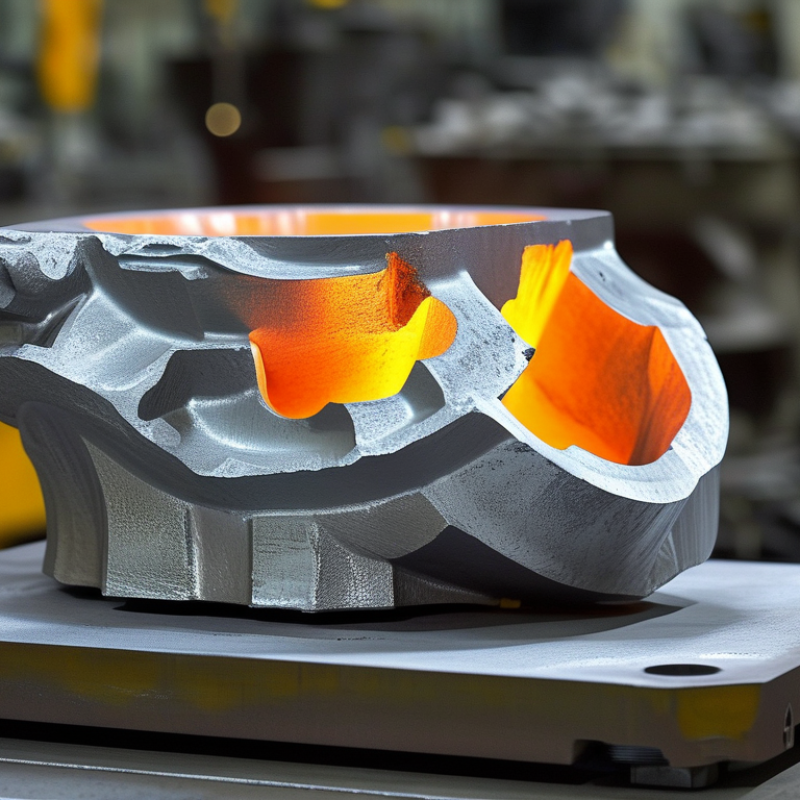
Aluminum investment casting is a precise manufacturing process. It involves creating a wax model of a desired part. This model is coated with a ceramic shell. Once the shell hardens, the wax is melted away, leaving a hollow mold.
The benefits of this process are significant. It allows for intricate designs with tight tolerances. The final castings have a smooth surface finish. This method also reduces material waste, making it environmentally friendly. However, it can be costly and time-consuming, requiring skilled craftsmanship.
One key aspect to consider is the initial investment in tools and materials. While the process may seem appealing, costs can add up. Additionally, the complexity of designs might lead to challenges in production. These factors require careful planning and expertise in aluminum casting to ensure success.
| Dimension | Description |
|---|---|
| Process | A manufacturing method that involves creating a mold from a wax pattern, which is then melted away to form a cavity for aluminum pouring. |
| Materials Used | Aluminum alloys often including 356, 319, or A356 for their excellent casting properties and corrosion resistance. |
| Benefits | High dimensional accuracy, excellent surface finish, complex geometries possible, reduced material waste, and lower production costs for large quantities. |
| Applications | Used in automotive, aerospace, medical devices, and consumer products where precision and lightweight structures are essential. |
| Solidification Process | The casting cools in the mold, allowing the aluminum to solidify into the desired shape before being removed and processed further. |
The aluminum investment casting process is a sophisticated method used to create precise metal parts. Key steps ensure high quality and efficiency. The journey begins with designing a wax pattern that reflects the final product. This step requires attention to detail to achieve the desired dimensions.
Next, the wax pattern undergoes a coating process. A ceramic shell encases the pattern, providing a mold for the molten aluminum. The coating must be uniform and thick enough to handle the pouring process. This requires skill; any inconsistency can lead to defects in the final casting.
Once the shell dries, the wax is melted away. This step often leads to challenges. Maintaining the right temperature is crucial; too high can damage the mold, while too low can leave wax residues. After removal of the wax, molten aluminum is poured into the cavity. Cooling and solidification follow, which can sometimes lead to warping if not managed correctly. Each step in aluminum investment casting demands meticulous planning and execution to ensure a successful outcome.
Aluminum investment casting is a precise and efficient manufacturing process. It creates complex shapes with high dimensional accuracy. Many industries benefit significantly from this method, including automotive, aerospace, and electronics. In the automotive sector, aluminum castings provide lightweight solutions that enhance fuel efficiency. Reports indicate that using aluminum components can reduce vehicle weight by up to 30%.
The aerospace industry also relies on aluminum investment casting. Lightweight yet strong parts contribute to better performance and fuel economy. The demand for lightweight materials has surged, with a projected market growth rate of 6.1% annually from 2021 to 2026 for aluminum casting technologies.
Tips: Consider the application's specific requirements. Each industry presents unique challenges and opportunities. Conduct thorough research before selecting an investment casting method. While aluminum offers many advantages, it is essential to assess its limitations. For instance, it may not suit all high-temperature applications. Taking a balanced approach can lead to more informed decisions in the casting process.
Aluminum investment casting offers unique advantages over other casting methods. This process allows for intricate designs, precise tolerances, and a smooth surface finish. It excels in producing complex shapes that are often difficult to achieve using sand casting or die casting. Moreover, the lightweight nature of aluminum makes it a preferred metal in various industries, from aerospace to automotive.
However, it is essential to consider the drawbacks. The initial setup costs for aluminum investment casting can be higher. This may discourage smaller projects or startups. Other methods, like sand casting, might be more economical for larger, simpler parts. While investment casting provides precision, it can also require extensive post-processing. This is particularly true if the design has numerous features.
When comparing aluminum investment casting with other techniques, the choice hinges on the project’s specific needs. Engineers and designers must weigh factors like cost, complexity, and production volume. While investment casting is superior for detailed designs, other methods might be better suited for high-volume, low-cost production. Each project presents a different set of challenges. Understanding these nuances is crucial for success.
Quality control is crucial in the aluminum investment casting process. It ensures that components meet precise specifications and are free from defects. This involves rigorous testing at multiple stages. The process begins with raw material checks, including alloy verification. Any inconsistency in material can lead to failures.
During casting, visual inspections play a pivotal role. Technicians examine the molds carefully. They check for any signs of contamination or misalignment. After casting, samples undergo mechanical testing. These tests evaluate strength and durability. Feedback from these tests is vital for continuous improvement.
Documentation is another essential aspect of quality control. Every step is logged and tracked. This transparency helps trace issues back to their source. While the process aims for perfection, challenges remain. Common issues like shrinkage or porosity occur. Addressing these problems requires expertise and experience. Constant refinement of techniques can enhance outcomes.