
If you are interested in financing to fund your Bay-Lynx purchase, we recommend that you connect with Easylease Corp., a Canadian-based leasing and finance company that offers premier equipment leasing and financial services. They are focused on making it easier than ever before for companies to overcome cash flow and resource constraints to acquire the assets they need to grow their business.
Leasing through Easylease Corp. can offer several benefits:
Click here for your Canadian instant lease quote >>
For US customers, Click here for your instant lease application >>
Global buyers are facing a larger and more demanding waste stream. The World Bank’s What a Waste 2.0 report estimated 2.01 billion tonnes of municipal solid waste in 2016. It projected this volume could reach 3.40 billion tonnes by 2050. UNEP’s Global Waste Management Outlook 2024 offers an even sharper warning. Municipal solid waste may rise from 2.3 billion tonnes in 2023 to 3.8 billion tonnes by 2050.
Baling capacity matters.
A reliable Recycling Baler Machine can compress cardboard, plastics, textiles, and selected metal packaging into manageable, stackable units. This reduces storage pressure and can improve transport efficiency. However, no machine fits every facility. A supermarket distribution center may need a vertical baler for moderate cardboard volumes. A materials recovery facility may require a high-throughput horizontal model with automatic wire tying. Moisture, contamination, bale density, power supply, maintenance skills, and local logistics all influence the final choice.
This guide examines seven strong options for international buyers. It compares throughput, chamber size, automation, energy use, safety features, installation demands, and service support. These criteria reflect practical purchasing concerns, not only catalogue specifications. Reported capacities also require caution. Manufacturers may measure output under ideal materials, trained operators, and continuous feeding. Real performance can be lower.
That difference matters.
The recommended machines should therefore be judged against verified site data, including daily waste volume, material composition, available floor space, and expected bale weight. Industry reports show the pressure clearly, but equipment decisions remain local, physical, and sometimes imperfect.
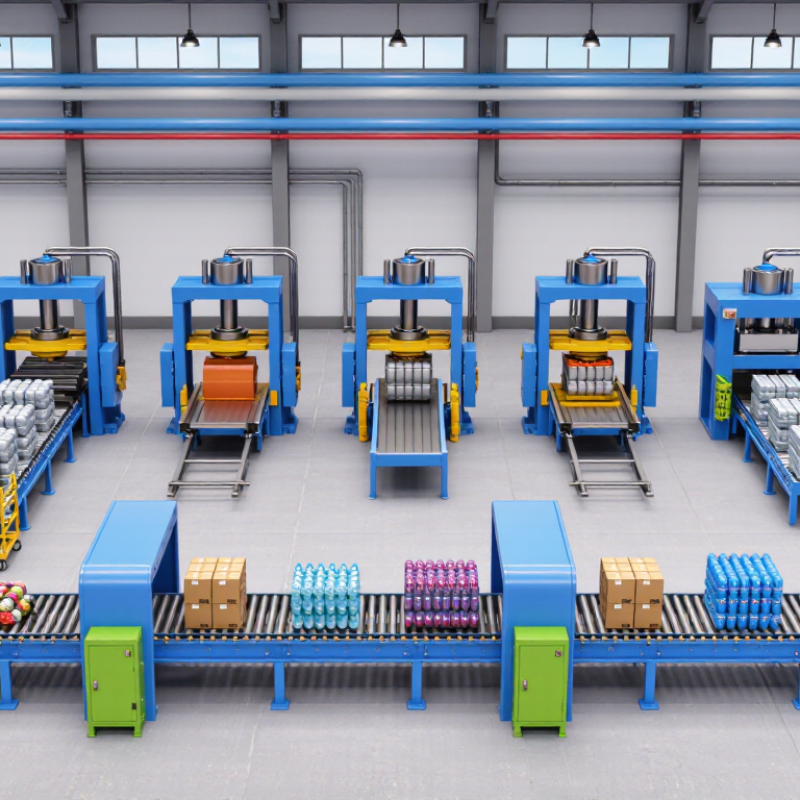
A suitable recycling baler must match local materials, power systems, labor skills, and transport conditions. UNEP’s Global Waste Management Outlook 2024 estimates municipal solid waste may reach 3.8 billion tonnes annually by 2050. Buyers therefore need machines that handle changing material volumes, not only today’s workload. Paper, cardboard, plastics, and textiles require different compression settings. Bale density, chamber size, and tying methods deserve practical testing before purchase.
Safety and reliability matter across borders. The machine should support regional voltage requirements, clear guarding, emergency stops, and accessible replacement parts. The International Energy Agency reports that industrial energy efficiency remains essential as global electricity demand grows. A baler with lower idle consumption can reduce operating costs, especially in facilities working long shifts. Remote diagnostics help, but they cannot replace trained technicians. That lesson is easy to overlook.
A global buyer should also examine shipping dimensions, installation time, documentation, and operator training. The World Bank’s What a Waste 2.0 report projected global waste generation could reach 3.40 billion tonnes by 2050. This suggests future capacity matters, yet oversized equipment can waste floor space and capital. I would compare several machines using real local feedstock, not showroom samples. Perfect specifications do not exist. A slightly slower baler may prove better when maintenance access is limited or electricity is unstable. Reliability is often measured in ordinary details: clean sensors, strong doors, simple controls, and service parts that arrive on time.
7 Best Recycling Baler Machines for Global Buyers?
Seven Leading Recycling Baler Machines and Their Main Applications
The right baler depends on material, throughput, labor, and available floor space. The Global E-waste Monitor 2024 recorded 62 million tonnes of e-waste in 2022. Only 22.3% was formally collected and recycled. This gap increases demand for controlled, traceable compaction.
A vertical baler suits retail stores, offices, and small warehouses handling cardboard and plastic film. A horizontal closed-door baler serves medium recycling centers with steady cardboard volumes. An open-end horizontal baler fits larger facilities needing continuous discharge. A two-ram baler handles mixed recyclables and bulky packaging with less manual sorting. An auto-tie baler improves output where labor costs are high. A mill-size baler produces dense bales for paper mills and large material recovery facilities. A textile baler compresses clothing, fiber, and soft goods for reuse or downstream processing.
The U.S. Environmental Protection Agency reported 67.5 million tons of paper and paperboard recycling in 2018. That figure shows why bale density and contamination control matter. The seventh option is not always the fastest. It may be a compact specialty baler for farms, hotels, or small transfer stations. Buyers should test real materials before signing contracts. Wet cardboard changes performance. Loose film can also defeat optimistic capacity claims. Energy use, wire consumption, maintenance access, and operator training deserve equal attention. A machine can be powerful, yet poorly matched.
The chart compares indicative operating throughput ranges for seven widely used recycling baler configurations. Vertical balers are commonly used by small retailers and facilities with limited space, while horizontal, automatic, and two-ram balers are designed for higher-volume paper, cardboard, plastic, and mixed-recycling operations. Textile and aluminum-can balers serve more specialized recycling streams. Actual performance depends on material type, moisture, bale density, loading method, and machine settings.
A reliable comparison starts with throughput, not advertised motor power. Measure actual output in tonnes per hour using your own cardboard, plastic, or textile mix. Feedstock density changes results. A machine producing dense bales may process fewer kilograms per hour, yet reduce transport costs significantly. Check bale dimensions, weight range, and chamber size together. Numbers need context.
Compaction force commonly indicates how tightly material is compressed, but it does not guarantee stable bale quality. Ask for the cylinder rating, compression cycle time, and pressure consistency during repeated runs. A wide feed opening can reduce sorting delays. Automatic tying may improve labor efficiency, while manual tying can simplify maintenance in smaller facilities. Test wire or strap access before purchase. Small design details matter.
Electrical requirements deserve careful attention for global buyers. Confirm voltage, phase, frequency, installed power, and control-system compatibility with the destination site. Safety interlocks, emergency stops, guarded chambers, and clear operating controls should be inspected during a live demonstration. Review noise levels, hydraulic leakage protection, spare-part availability, and remote technical support. A strong warranty is useful, but service response time often matters more. I would also request three continuous production tests, because one impressive demonstration can hide overheating or inconsistent bale density. Some comparisons overlook cleaning access. That is a mistake. Daily maintenance still takes real time.
Choosing a recycling baler starts with the material, not the machine’s advertised pressure. Cardboard usually needs a vertical or horizontal baler with reliable wire or strap tying. Plastic film needs stronger compression control because elastic material can expand after ejection. PET bottles and aluminum cans often require higher compaction force and a larger feeding opening. The OECD Global Plastics Outlook reports that 353 million tonnes of plastic waste were generated globally in 2019, while only 9% was recycled. That pressure makes stable bale density commercially important.
Paper mills may reject bales with excessive moisture, loose edges, or mixed grades. Test your actual feedstock before purchasing. Include dust, labels, flattened cartons, and seasonal changes. A chamber that handles dry cardboard may struggle with wet paper. I have seen buyers focus on motor power and overlook tying speed. That was expensive. Bale size, cycle time, hopper height, noise, and maintenance access deserve equal attention. The World Bank estimates global municipal waste could reach 3.40 billion tonnes annually by 2050, increasing demand for dependable sorting and compaction equipment.
Tips: Request trial bales using your own materials. Measure bale weight, density, recovery time, and wire consumption. For film, check expansion after twelve hours. For cans, inspect bale stability during forklift movement. Ask for spare-part availability, operator training, and documented safety procedures. A cheaper baler is not always cheaper to run. Sometimes, it is simply cheaper to buy.
For global buyers, the seven best recycling baler machines should be judged by total cost, not purchase price. Vertical balers suit small facilities with limited floor space. Horizontal and two-ram models handle higher volumes. Fully automatic systems can reduce labor, but they need stronger electrical infrastructure and trained operators. The Global E-waste Monitor 2024 reported 62 million tonnes of e-waste generated in 2022, with only 22.3% formally collected and recycled. This growing stream increases demand for reliable, adaptable baling equipment.
Safety must come before compression speed. Check interlocked doors, emergency stops, guarding, noise levels, and documented risk assessments. Confirm electrical compatibility before shipping across borders. Maintenance access also matters. A machine that requires imported parts may create expensive delays. Request spare-parts lists, preventive-maintenance schedules, remote diagnostics, and technician response times. The U.S. Occupational Safety and Health Administration identifies machine guarding and unexpected start-up as major workplace hazards. Yet, buyers sometimes focus too heavily on output figures. That is a costly mistake.
Tips: Compare five-year ownership costs, including power, labor, consumables, freight, training, and downtime. Ask for test-bale data using your actual material. Inspect the chamber, hydraulic seals, wiring, and control panel. Service support is not a promise; require measurable delivery times. Local standards still need verification, because one certificate may not satisfy every destination. A lower-cost model may win the quotation, but not the operation.
| Rank | Machine Type | Typical Recycling Application | Indicative Purchase Price (USD) | Typical Bale Weight | Indicative Throughput | Typical Installed Power | Recommended Buyer Profile | Safety Considerations | Maintenance Requirements | Global Purchasing Factors | Overall Suitability |
|---|---|---|---|---|---|---|---|---|---|---|---|
| 1 | Automatic Horizontal Baler with Wire Tying | High-volume cardboard, paper, PET bottles, aluminum cans, and sorted municipal recyclables | US$45,000–US$150,000 | 400–800 kg | 8–20 tonnes/hour | 75–160 kW | Large material recovery facilities, paper mills, distribution centers, and export-oriented recycling plants | Interlocked feed doors, emergency-stop circuits, guarded wire-tying area, hydraulic-pressure protection, and operator training are essential | Daily cleaning; weekly inspection of wire channels and sensors; regular hydraulic-filter, oil, and wear-part checks | Highest output among common baler formats, but freight, installation, foundations, electrical supply, and commissioning can significantly increase total cost | ★★★★★ Best for industrial-scale operations |
| 2 | Automatic Horizontal Baler with Strapping System | Cardboard, printed paper, plastic film, woven bags, and lightweight packaging materials | US$35,000–US$120,000 | 300–700 kg | 5–15 tonnes/hour | 45–110 kW | Retail distribution hubs, logistics centers, commercial waste contractors, and medium-to-large recycling plants | Automatic cycle guarding, light curtains or safety sensors, anti-jam controls, and accessible emergency stops should be specified | Inspect strap heads, cutters, conveyors, hydraulic seals, and photoelectric sensors; remove loose film from moving components | Usually easier to operate than wire-tying systems, but buyers should confirm strap availability, local technician skills, and spare-part lead times | ★★★★★ Best balance of automation and flexibility |
| 3 | Semi-Automatic Horizontal Baler | Cardboard, paper, textile waste, plastic film, and general commercial recyclables | US$18,000–US$65,000 | 200–500 kg | 2–8 tonnes/hour | 22–75 kW | Small and medium recycling businesses, warehouses, supermarkets, and regional waste stations | Two-hand controls, ram-area guarding, bale-door interlocks, pressure relief, and clear lockout procedures are recommended | Requires routine lubrication, guide-rail inspection, hydraulic checks, and manual tying or strapping adjustments | Lower capital cost and simpler controls than fully automatic systems; labor availability and bale-tying time should be included in operating-cost calculations | ★★★★☆ Best value for medium-volume buyers |
| 4 | Vertical Downstroke Baler | Cardboard, paper, plastic film, textiles, foam, and small-volume packaging waste | US$4,000–US$25,000 | 40–350 kg | 0.3–2.5 tonnes/hour | 5.5–30 kW | Retail stores, hotels, offices, schools, small warehouses, and space-constrained facilities | Door interlocks, ram-stop protection, guarded loading openings, stable floor anchoring, and safe bale-ejection procedures are required | Generally simple; inspect hydraulic hoses, cylinder seals, door hinges, guide components, and chamber cleanliness | Low purchase price and compact footprint, but lower throughput and manual tying make it unsuitable for continuous high-volume processing | ★★★★☆ Best for low-to-medium volumes and limited space |
| 5 | Two-Ram Baler | Mixed municipal solid waste, bulky cardboard, plastics, carpet, mattresses, and difficult-to-process materials | US$100,000–US$350,000 | 500–1,200 kg | 15–40 tonnes/hour | 110–250 kW | Large municipal facilities, transfer stations, waste-to-energy plants, and high-throughput material recovery facilities | Advanced guarding, automated jam detection, access-door interlocks, hydraulic safety valves, and formal permit-to-work procedures are essential | Requires planned preventive maintenance for hydraulic systems, ram guides, wear plates, sensors, conveyors, and bale discharge equipment | High purchase and installation cost, but strong compaction performance and flexible feeding can reduce labor and handling costs at large sites | ★★★★★ Best for difficult materials and continuous industrial duty |
| 6 | PET Bottle and Aluminum Can Baler | Compacted PET bottles, aluminum cans, beverage containers, and sorted packaging streams | US$15,000–US$75,000 | 150–500 kg | 2–10 tonnes/hour | 30–90 kW | Beverage recovery plants, deposit-return systems, sorting centers, and recyclers handling high volumes of containers | Feed-hopper guarding, conveyor emergency cords, metal-object protection, overload control, and safe access to compacting chambers are important | Clean compacting chambers; inspect bale density controls, belts or wire systems, hydraulic components, and conveyor bearings | Buyers should verify compatibility with wet or contaminated containers, bale-density requirements, moisture management, and downstream transport limits | ★★★★☆ Best for container-focused recycling streams |
| 7 | Small Vertical Baler for Film and Textile Waste | Stretch film, shrink wrap, textile offcuts, soft packaging, and light industrial waste | US$3,000–US$15,000 | 30–200 kg | 0.2–1.5 tonnes/hour | 3–18.5 kW | Small manufacturers, garment factories, retail backrooms, agricultural packhouses, and local collection points | Prevent overfilling, use guarded loading areas, provide stable floor placement, and follow manufacturer-specific bale-release procedures | Low-complexity maintenance: clean the chamber, lubricate moving parts, inspect hydraulic hoses, and check electrical connections | Lowest entry price and power demand; buyers should prioritize local service access because downtime can be significant for single-machine facilities | ★★★☆☆ Best for entry-level and decentralized recycling |