If you are interested in financing to fund your Bay-Lynx purchase, we recommend that you connect with Easylease Corp., a Canadian-based leasing and finance company that offers premier equipment leasing and financial services. They are focused on making it easier than ever before for companies to overcome cash flow and resource constraints to acquire the assets they need to grow their business.
Leasing through Easylease Corp. can offer several benefits:
Click here for your Canadian instant lease quote >>
For US customers, Click here for your instant lease application >>
Cement trucks are familiar on construction sites, yet their work is more precise than their size suggests. These vehicles transport freshly mixed concrete while keeping its ingredients moving. The rotating drum helps prevent separation between cement, water, sand, and coarse aggregate. Without steady rotation, the mixture could stiffen, settle, or become difficult to place.
A cement truck usually receives its load at a batching plant. The plant measures each material according to a designed mix. Water content, aggregate size, temperature, and travel time can affect the final result. Timing matters. The clock starts. During delivery, the drum turns at a controlled speed, using internal blades to lift and fold the mixture. At the job site, the driver adjusts the discharge process while workers guide the concrete into forms, pumps, or paving equipment.
This basic explanation can hide important judgment. A truck does not repair a poorly designed mix or careless handling. Experienced crews check consistency, delivery records, and site conditions before placement. They also watch for delays, because concrete cannot remain workable indefinitely. Safety remains essential around moving drums, chutes, reversing vehicles, and wet concrete.
Not every truck operates identically. Drum capacity, mixing method, engine power, and local specifications may differ. That matters more than many casual explanations admit. Understanding these details makes it easier to see how cement trucks support foundations, bridges, roads, and everyday structures. Their operation is practical engineering, but it still depends on careful measurement, trained people, and decisions made under changing conditions.
What Are Cement Trucks and How Do They Work?
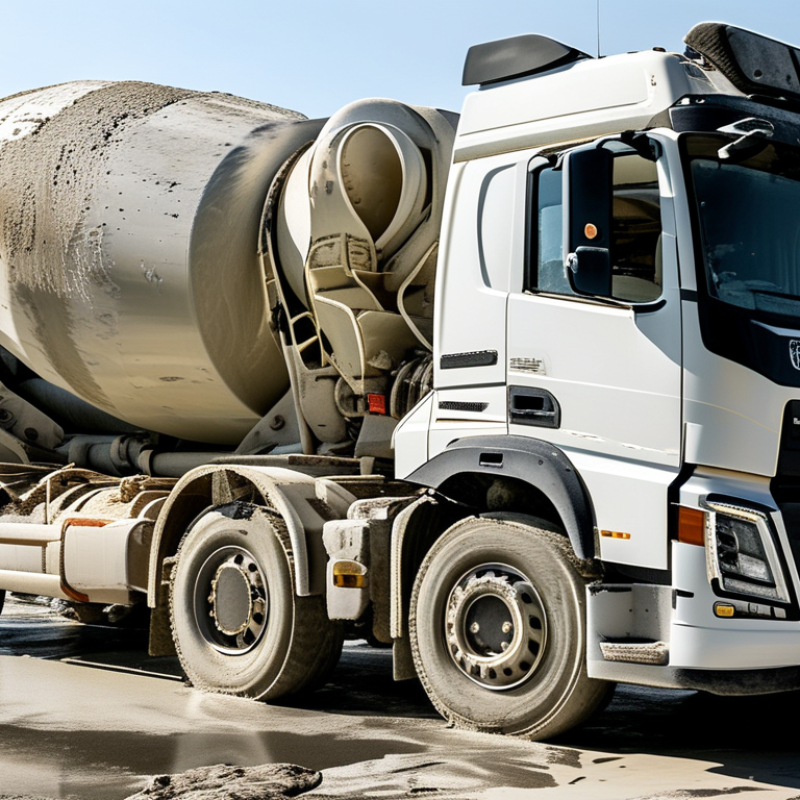
A cement truck is more accurately called a ready-mix concrete truck. Cement is only the binding powder. Concrete also contains water, sand, and coarse aggregate. The truck’s main purpose is simple: it carries fresh concrete from a batching plant to a construction site while keeping the mixture uniform.
Its rotating drum is the key component. Internal blades lift and fold the material during transit. This movement reduces segregation, where heavier stones sink and water rises. The National Ready Mixed Concrete Association reports that many trucks commonly carry about 8 to 10 cubic yards, though local limits vary. The International Energy Agency estimated global cement production at roughly 4.1 billion tonnes in 2022. That figure shows the scale behind these ordinary-looking vehicles. Still, the truck does not “make cement” on the road. It mainly protects concrete quality during delivery.
Tips: Check the delivery ticket before discharge. Confirm the mix strength, water content, volume, and required placement time. Avoid adding water casually. It may improve flow, but it can lower strength and increase shrinkage. The exact limit depends on the approved mix design and site conditions. A practical detail is often missed: hot weather can accelerate setting, while long traffic delays can reduce workability. Even the best truck cannot fully repair poorly timed placement. My wording may sound firm, but field conditions remain unpredictable. Temperature, drum speed, and testing results deserve attention.
| Data Dimension | Typical Information | How It Works or Why It Matters |
|---|---|---|
| Common Technical Name | Concrete mixer truck or ready-mix truck | Although often called a cement truck, the vehicle normally transports and agitates fresh concrete, which is a mixture of cement, water, sand, and coarse aggregate. |
| Main Purpose | Transport fresh concrete from a batching facility to a construction site | The truck helps deliver a usable concrete mixture before it loses too much workability and begins to set. |
| Primary Material Carried | Fresh, wet concrete | The load may include cement paste, fine aggregate, coarse aggregate, water, and approved chemical admixtures. |
| Main Mixing Component | Rotating drum with internal spiral blades | The blades lift and fold the concrete while the drum rotates, helping maintain a more uniform mixture during transport. |
| Drum Rotation Modes | Agitating, mixing, and discharging | Slow rotation can keep the mixture moving; faster rotation may be used for mixing; reverse rotation helps discharge concrete through the drum opening. |
| Typical Drum Capacity | Approximately 5–12 cubic metres of concrete | Actual capacity depends on vehicle size, road regulations, axle limits, drum design, and the required load density. |
| Drum Drive System | Hydraulic motor, gearbox, and pump system | The truck engine supplies power to hydraulic equipment, which controls drum rotation and allows the operator to change direction and speed. |
| Loading Process | Concrete enters through the upper charging hopper | The drum is usually rotated during loading so the materials are distributed and retained inside the drum. |
| Discharge Method | Rear discharge through a chute | The rotating drum moves concrete toward the rear opening, where adjustable chutes direct it into forms, pumps, slabs, or other placement areas. |
| Chute Function | Control the direction and reach of the concrete flow | Chutes can usually be folded, extended, or angled to improve placement accuracy and reduce spillage. |
| Typical Concrete Delivery Window | Often about 60–90 minutes from water addition, subject to mix design and site conditions | Temperature, traffic, admixtures, cement type, and project specifications can shorten or extend the workable period. |
| Key Operating Control | Drum rotation speed and direction | Incorrect operation can cause segregation, premature setting, uneven consistency, or inefficient discharge. |
| Common Construction Uses | Foundations, slabs, columns, walls, pavements, footings, and structural elements | The truck supports projects that require a continuous or carefully timed supply of fresh concrete. |
| Water Addition Consideration | Water should be added only according to the approved mix design and site procedure | Uncontrolled water addition can reduce strength, increase shrinkage, and alter the specified performance of the concrete. |
| Cleaning Requirement | The drum, blades, hopper, and chutes require prompt cleaning after discharge | Hardened concrete can reduce drum capacity, affect mixing performance, add weight, and create maintenance or safety problems. |
| Important Safety Areas | Moving drum, rotating blades, vehicle movement, wet concrete, and elevated chutes | Operators and site workers should maintain safe clearance, use suitable protective equipment, and follow established traffic and lockout procedures. |
| Cement Truck vs. Cement Powder Tanker | A mixer truck carries fresh concrete; a bulk tanker carries dry cement powder | The two vehicles serve different purposes: mixer trucks deliver ready-to-place concrete, while tankers supply cement for batching or other industrial processes. |