
If you are interested in financing to fund your Bay-Lynx purchase, we recommend that you connect with Easylease Corp., a Canadian-based leasing and finance company that offers premier equipment leasing and financial services. They are focused on making it easier than ever before for companies to overcome cash flow and resource constraints to acquire the assets they need to grow their business.
Leasing through Easylease Corp. can offer several benefits:
Click here for your Canadian instant lease quote >>
For US customers, Click here for your instant lease application >>
Choosing China’s top Industrial Chain Conveyor suppliers requires more than comparing prices or catalog photos. A reliable supplier should demonstrate proven factory experience, documented load testing, and consistent control over chain, sprockets, frames, and drive units. These details matter when hot castings, cartons, or pallets travel through dusty production lines every day.
R. Todd Swinderman, a respected conveyor engineer and former Martin Engineering leader, has emphasized, “A conveyor is only as reliable as its weakest component.” That principle is especially relevant to Industrial Chain Conveyor selection. A polished gearbox cannot compensate for poor welds, inaccurate sprocket alignment, or weak chain pins. Buyers should request material certificates, inspection records, installation references, and clear maintenance guidance. Factory visits can reveal practical facts that websites often hide, including oil leakage, unfinished guarding, or noisy test runs.
China has many capable manufacturers, but quality is not automatically consistent. Some suppliers offer excellent engineering; others mainly resell standard components. The difference may appear after six months, when chain elongation increases and transfer points begin to jam. This guide examines supplier capability, customization, production capacity, safety design, after-sales service, and total operating cost. It also considers an uncomfortable point: the cheapest quotation may become the most expensive decision. No supplier deserves automatic trust. Evidence should lead the decision.
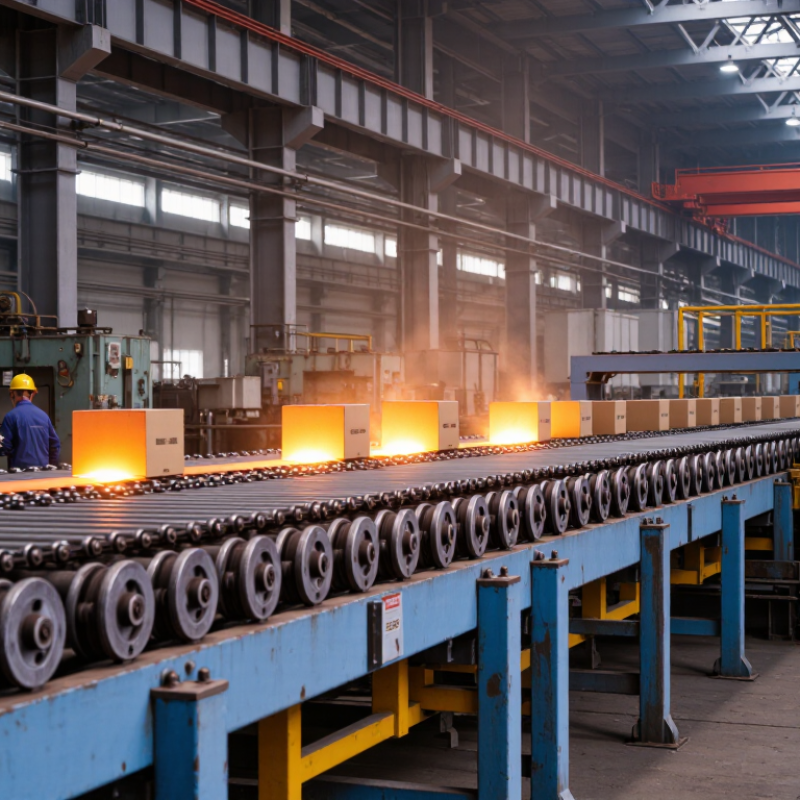
Industrial chain conveyor systems move heavy materials through factories, warehouses, and processing lines. They use linked metal chains to carry pallets, bins, fixtures, or unusually shaped products. Unlike belt conveyors, they tolerate higher loads, heat, and rough handling. Their working speed is usually moderate, but their control is dependable.
A typical system includes drive sprockets, return sprockets, chain strands, support rails, a frame, and a geared motor. Wear strips guide the chain and reduce friction. The frame may use steel or stainless steel, depending on moisture and cleaning requirements. Engineers should check load weight, product dimensions, line length, speed, and operating temperature. Small design errors can create noise, vibration, or uneven movement. That part is easy to underestimate.
Applications include pallet transfer, carton handling, assembly lines, automotive production, and cold-storage logistics. In practical projects, operators often value simple access to tensioning and lubrication points.
Tips: Confirm the chain pitch and load rating before ordering. Keep sprockets aligned. Install guards around moving parts. Record inspection results regularly.
Selecting a supplier also requires more than comparing prices. Review material certificates, factory testing, technical drawings, spare-part support, and delivery records. A capable supplier should explain limitations clearly, not promise performance without operating data. Always test the conveyor under realistic load conditions before full production.
Selecting China’s industrial chain conveyor suppliers requires more than comparing quotations. The International Federation of Robotics reported 276,288 industrial robot installations in China during 2023, representing about 51% of global installations. This scale reflects strong automation demand, but it also creates wide differences in manufacturing discipline. Check chain pitch, working load, tensile strength, operating speed, temperature range, and corrosion resistance against your actual line conditions.
Ask for material certificates, heat-treatment records, dimensional inspection reports, and traceable batch numbers. A capable supplier should explain roller hardness, pin wear, lubrication needs, and expected service intervals. Request a production sample before approving bulk orders. Test it under real loading, not only on a clean showroom fixture. Applicable ISO or GB requirements should be clearly identified in the technical agreement. Vague compliance claims are warning signs.
Delivery reliability matters as much as mechanical performance. The MHI 2024 Annual Industry Report found that 55% of supply-chain professionals planned to increase technology investment, increasing pressure on equipment availability and maintenance response. Evaluate production capacity, spare-part support, packaging quality, and documented corrective-action procedures. Total cost includes downtime, replacement labor, lubricant use, and emergency freight. The lowest quotation can be expensive.
Supplier audits are useful, but they are not perfect. A polished factory visit may hide weak process control. Verify records independently when possible. I would also compare two or three samples, because one successful sample proves very little. Proper selection is slower at the beginning, yet it usually protects throughput, safety, and long-term operating costs.
China Top Industrial Chain Conveyor Suppliers?
Leading Supplier Categories and Manufacturing Capabilities in China
China’s conveyor supply market includes belt, roller, chain, slat, and modular systems. Each category serves different loads, temperatures, and production speeds. Belt conveyors suit cartons and bulk materials. Chain conveyors handle pallets, metal parts, and heavier products. Roller systems remain practical for warehouse transfer lines.
Strong suppliers usually combine engineering design with in-house manufacturing. Their facilities may include laser cutting, CNC machining, robotic welding, powder coating, and electrical assembly. Stainless steel frames are common in food-related environments. Carbon steel structures often support heavier industrial applications. A dependable supplier should provide load calculations, motor selection, layout drawings, and inspection records before production.
Details matter.
A capable factory can adjust conveyor width, frame height, chain pitch, transfer spacing, and guarding. It should also test tracking, noise, belt tension, and emergency-stop functions. Site experience helps identify problems that drawings miss, such as limited maintenance space or uneven floors. Still, a polished catalog proves little by itself. Some suppliers outsource key components without clear disclosure, which can complicate quality control and delivery. Buyers should review material certificates, welding samples, factory photographs, and trial-run videos. I would also request a small pilot unit before approving a complete line. That step costs time, but it may expose weak alignment or difficult cleaning points early.
| Supplier Category | Typical Conveyor Configuration | Common Applications | Typical Materials and Components | Manufacturing Capabilities | Typical Customization Options | Relevant Standards and Quality Practices |
|---|---|---|---|---|---|---|
| Belt Conveyor Suppliers | Flat belt, cleated belt, troughed belt, inclined belt, and enclosed belt systems. | Warehouse handling, packaging, food processing, mining, aggregates, and general manufacturing. | PVC PU Rubber Carbon steel Stainless steel | Frame fabrication, pulley machining, belt tracking systems, drive-unit integration, welding, powder coating, and assembly testing. | Conveyor length and width, belt surface, incline angle, guardrails, hoppers, covers, sensors, variable-speed drives, and washdown construction. | Material traceability, dimensional inspection, weld inspection, electrical safety checks, and quality systems commonly aligned with ISO 9001 practices. |
| Roller Conveyor Suppliers | Gravity roller, powered roller, accumulation roller, flexible roller, and pallet roller conveyors. | Carton transport, parcel sorting, pallet handling, assembly lines, distribution centers, and loading areas. | Galvanized rollers Carbon steel Stainless steel Polymer rollers | Tube rolling, shaft machining, bearing installation, frame forming, chain or belt drive integration, and modular line assembly. | Roller diameter and pitch, load capacity, conveyor elevation, accumulation zones, transfers, side guides, stops, and barcode or photoelectric sensors. | Load testing, roller runout inspection, bearing checks, guarding verification, and electrical testing for powered systems. |
| Slat Chain Conveyor Suppliers | Tabletop chain, flexible chain, straight-running chain, and side-flexing chain conveyors. | Bottling, beverage packaging, can handling, cosmetics, pharmaceutical packaging, and small-container transfer. | Acetal chain Polypropylene chain Stainless steel chain 304/316 stainless frames | Chain-track machining, stainless fabrication, sprocket machining, guide-rail installation, lubrication-system integration, and line commissioning. | Chain width, radius sections, transfer plates, accumulation tables, cleanroom-compatible surfaces, washdown design, and speed control. | Hygienic design assessment, surface-finish inspection, food-contact material documentation where applicable, and guarding checks. |
| Drag Chain and Scraper Conveyor Suppliers | Horizontal, inclined, submerged, and enclosed drag-flight conveyor systems. | Coal, ash, biomass, grain, fertilizer, wood chips, sludge, and abrasive bulk materials. | Carbon steel Wear-resistant steel Stainless steel Forged chain | Heavy plate fabrication, chain-flight assembly, wear-liner installation, sprocket machining, sealed housing fabrication, and factory load checks. | Conveyor length, capacity, flight design, liner material, discharge points, dust sealing, explosion-risk design inputs, and high-temperature options. | Structural welding inspection, chain tensile verification, drive protection, emergency-stop testing, and guarding according to project requirements. |
| Bucket Elevator and Vertical Conveyor Suppliers | Belt or chain bucket elevators, continuous vertical conveyors, and reciprocating vertical lifts. | Grain, cement, minerals, powders, food ingredients, cartons, totes, and vertical warehouse movement. | Rubber belt Industrial chain Mild steel Stainless steel Polymer buckets | Bucket forming, casing fabrication, head and boot assembly, belt or chain installation, alignment checks, and drive-system integration. | Lift height, bucket volume, discharge arrangement, casing thickness, inspection doors, dust extraction, backstop, and access platforms. | Alignment inspection, belt or chain tension checks, overspeed and backstop testing, access guarding, and project-specific safety review. |
| Screw Conveyor Suppliers | Horizontal, inclined, vertical, shafted, shaftless, and tubular screw conveyors. | Powders, granules, sludge, cement, grain, chemicals, food ingredients, and waste-processing applications. | Carbon steel 304 stainless steel 316 stainless steel Abrasion-resistant flighting | Flight forming, shaft machining, trough rolling, end-bearing installation, cover fabrication, sealing, and feeder calibration. | Diameter and pitch, conveyor length, flight profile, inlet and outlet locations, heating or cooling jackets, liners, and variable-speed control. | Dimensional inspection, shaft runout checks, weld inspection, sealing checks, and material certification when specified by the purchaser. |
| Overhead Chain Conveyor Suppliers | Enclosed-track, power-and-free, monorail, and floor-to-floor overhead systems. | Automotive parts, paint lines, garment handling, metal finishing, storage, and continuous work-in-process transport. | Carbon steel track Forged chain Trolleys Stainless components | Track bending, trolley assembly, chain installation, drive-station fabrication, hanger production, and line balancing support. | Track layout, trolley spacing, hanger design, load rating, accumulation zones, transfer units, lubrication, and corrosion protection. | Load and trolley movement testing, track alignment checks, guarding review, emergency-stop testing, and structural verification. |
| Modular Plastic Belt Conveyor Suppliers | Straight-running, radius, spiral, incline, and sanitary modular belt systems. | Food processing, bakery, meat and poultry, beverage, pharmaceutical, and consumer-product packaging. | Acetal Polypropylene Polyethylene 304/316 stainless steel | Sanitary frame fabrication, sprocket machining, belt assembly, radius-section construction, washdown design, and line integration. | Belt pitch and surface, open-area belt selection, conveyor width, radius, clean-in-place features, drip pans, and hygienic supports. | Hygienic design review, surface-finish checks, cleanability assessment, food-contact declarations where applicable, and electrical safety testing. |
| System Integrator and Turnkey Conveyor Suppliers | Multi-conveyor material-handling lines combining belts, rollers, chain conveyors, lifts, and control systems. | Distribution centers, e-commerce fulfillment, manufacturing plants, automated warehouses, and production-line logistics. | Mixed conveyor technologies Steel structures Motors and drives Sensors and controls | Layout engineering, 3D design, structural fabrication, PLC and HMI integration, line simulation, installation supervision, commissioning, and operator training. | Throughput, accumulation logic, routing, scanning, weighing, robotic interfaces, safety circuits, warehouse-management interfaces, and remote diagnostics. | Functional testing, risk assessment, safety-circuit validation, documentation packages, factory acceptance testing, and site acceptance testing. |
| Data note: The categories and capabilities shown are representative of commonly available industrial conveyor manufacturing in China. Actual load capacity, speed, dimensions, materials, delivery time, certifications, and compliance requirements must be confirmed against the supplier’s technical drawings, bill of materials, inspection plan, and project specifications. | ||||||
China’s industrial conveyor suppliers vary widely in engineering discipline and production control. Quality should be verified, not assumed. Request material certificates, dimensional records, motor test results, and inspection reports for each shipment. A supplier following ISO 9001 procedures usually has clearer process controls, but certification alone proves little. Check how workers apply those procedures on the factory floor.
Customization starts with operating data. Share load weight, belt speed, conveyor length, elevation, product temperature, and daily running hours. A suitable supplier can recommend frame thickness, roller spacing, drive capacity, guarding, and control options. Ask for a detailed drawing before production begins. Small errors in discharge height can create expensive installation delays. Prototype testing helps, especially for dusty, wet, or high-cycle environments.
Supply chain evaluation needs more than a low quotation. Review production capacity, component sources, lead-time records, packaging methods, and spare-parts availability. A factory visit, video audit, or independent inspection can reveal uneven welds, poor cable routing, or weak protective coating. Request a sample purchase order with clear acceptance criteria. My early supplier reviews were too focused on price. That was a mistake. I now compare total operating cost, communication speed, corrective action, and documentation quality. No evaluation is perfect. Seasonal congestion and component shortages can still change delivery plans. Build realistic buffers.
When comparing China’s top industrial chain conveyor suppliers, do not judge the lowest quotation first. Request a line-by-line breakdown covering chain grade, frame material, motor rating, conveyor length, speed, load, controls, guarding, packaging, and installation. A quote missing duty-cycle assumptions is incomplete. Ask for factory acceptance testing, dimensional drawings, inspection records, and references from similar industries. MHI’s 2024 Annual Industry Report found that 55% of supply-chain leaders planned to increase automation investment, making integration support increasingly important.
Service quality often appears after payment. Confirm response times, spare-parts availability, remote diagnostics, commissioning support, and technician coverage in your region. Ask how suppliers handle chain elongation, noisy sprockets, and misalignment after six months. Small details matter. A supplier following documented quality procedures, such as ISO 9001-based controls, offers stronger evidence than polished product photos. Still, certification alone does not prove reliable field performance.
Compare total cost over five years, not only the purchase price. Include energy use, lubrication, replacement chains, downtime, training, and software updates. The U.S. Department of Energy reports that motor-driven systems represent a major share of industrial electricity consumption, so motor efficiency deserves a clear calculation. I would also request a sensitivity estimate for heavier loads and longer operating hours. Buyers sometimes overlook this. That mistake can make a seemingly cheap conveyor expensive. Allow room for honest uncertainty, because real production conditions rarely match the first spreadsheet.