
If you are interested in financing to fund your Bay-Lynx purchase, we recommend that you connect with Easylease Corp., a Canadian-based leasing and finance company that offers premier equipment leasing and financial services. They are focused on making it easier than ever before for companies to overcome cash flow and resource constraints to acquire the assets they need to grow their business.
Leasing through Easylease Corp. can offer several benefits:
Click here for your Canadian instant lease quote >>
For US customers, Click here for your instant lease application >>
Choosing a Pp Sheet Machine in 2026 requires more than comparing motor power or purchase prices. Global plastics production reached 413.8 million tonnes in 2023, according to PlasticsEurope’s Plastics—The Fast Facts 2024 report. Polypropylene remains important for packaging, automotive parts, construction products, and reusable industrial sheets. Demand is growing. So are expectations for energy efficiency, stable thickness, and responsible material use.
The OECD Global Plastics Outlook reported that only about 9% of plastic waste was successfully recycled worldwide in 2019. This figure should influence equipment decisions. A modern line must handle consistent virgin resin, controlled recycled content, and changing material blends. Recycling specialist Dr. Edward Kosior has said, “The problem is not plastic; it is what we do with it.” That principle belongs beside every machine quotation.
A suitable Pp Sheet Machine should match your target thickness, sheet width, output, resin grade, and cooling method. Check actual production samples, not only catalog promises. Ask for energy data under similar operating conditions. Inspect the extruder, die, calender, haul-off unit, trimming system, and automatic thickness controls. Small details matter. A poorly adjusted die can leave visible bands across a sheet. Excessive cooling can also create warping.
Reports provide useful direction, but they cannot replace factory experience. A cheaper machine may consume more electricity or require frequent cleaning. I have seen specifications look convincing while maintenance access remained awkward. That is an uncomfortable point. The best 2026 decision may not be the fastest machine, but the most stable, serviceable, and measurable one.
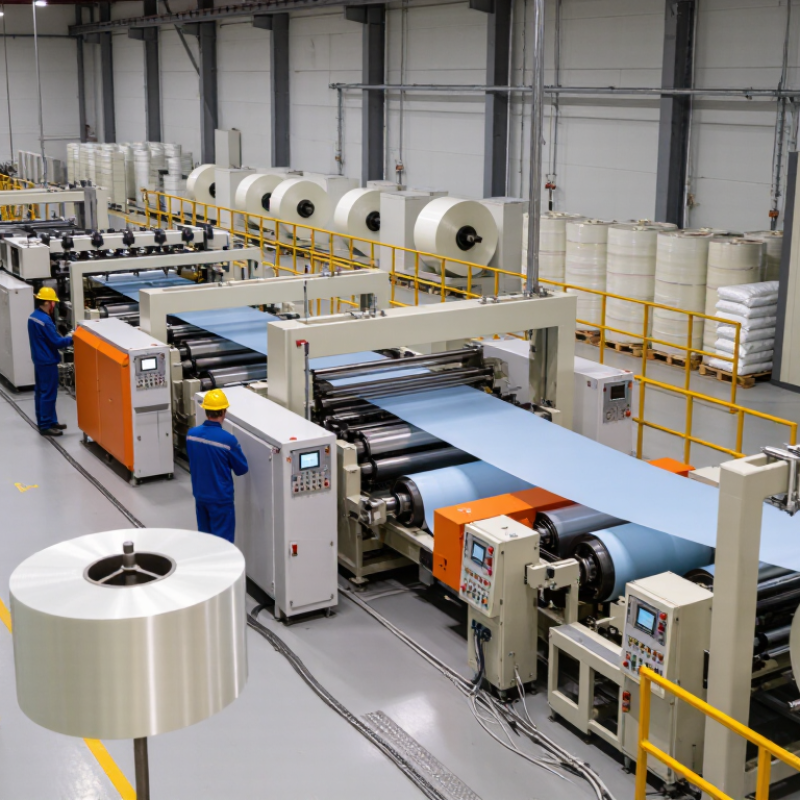
Before comparing PP sheet machines, define the product you must make. Record the target sheet width, thickness, surface finish, and acceptable tolerance. A 1.2-meter sheet needs different equipment from a narrow roll-fed product. Thickness range matters too. If your range spans 0.5 to 8 millimeters, check whether one screw and die can maintain stable output. Do not estimate demand.
Specify the resin clearly. Virgin PP, recycled PP, fillers, and color additives affect melting behavior. List the expected percentage of each material. I once saw a line designed for clean resin struggle when mineral filler was added. The melt became uneven, and edge trimming increased. That mistake was avoidable. Ask for a controlled trial using your actual formulation. Measure thickness variation, surface quality, and cooling time.
Match capacity to real production conditions, not only the advertised maximum. List monthly demand, operating hours, startup losses, and planned maintenance. Leave space for a future thickness or width increase. Check floor dimensions, electrical supply, cooling water, ventilation, and material storage. Operators also need safe access to the die and rollers. I would leave extra room around the line, although limited workshops often ignore this. A perfect spreadsheet rarely survives the first production week.
How to Choose a PP Sheet Machine in 2026?
PP sheet production begins with the right extrusion design. A single-screw line suits stable, uniform polypropylene feedstock and simpler sheet structures. A twin-screw line handles fillers, recycled content, and frequent material changes more consistently. However, it usually costs more and requires tighter process control. Multi-layer co-extrusion adds functional layers, such as recycled cores or impact-resistant surfaces. It also increases startup waste.
Forming method matters as much as machine type. Vacuum forming is economical for trays, liners, and shallow packaging. Pressure forming adds compressed air and creates sharper corners, useful for technical housings. Compression forming can produce thicker parts with lower directional stress, but cycle times may be longer. A 2023 report from PlasticsEurope recorded 413.8 million tonnes of global plastics production, showing the scale of demand and the pressure to improve material efficiency. That figure does not automatically justify a high-speed line.
Check the sheet width, thickness range, cooling capacity, and edge-trim recovery system. The OECD Global Plastics Outlook reported 460 million tonnes of plastic production in 2019, while only a limited share entered effective recycling systems. This makes recycled-content compatibility increasingly important. I would test actual resin blends before purchasing. Laboratory results can mislead. A small pilot run should measure melt stability, thickness variation, forming temperature, and scrap rate. Energy meters on each heating zone are also valuable. A cheaper machine may consume more electricity during long production runs. That detail is easy to miss.
Comparison of common PP sheet machine configurations and downstream forming methods by typical sheet-thickness range. Actual operating limits depend on PP grade, die design, line width, cooling capacity, and product geometry.
Single-screw lines are widely used for standard PP sheets and stable high-volume production. Twin-screw lines can offer improved mixing for filled or recycled PP compounds. Multi-layer co-extrusion is suitable when a product needs different surface, core, barrier, or recycled-content layers. Vacuum forming is commonly used for simpler shapes, pressure forming provides better detail, and twin-sheet forming is used for hollow or double-wall parts. The thickness bands shown are representative industry ranges rather than universal machine specifications.
When choosing a PP sheet machine in 2026, do not judge performance from output figures alone. Evaluate the complete line, from feeding to stacking. Check the target sheet width, thickness range, and production speed. A machine designed for 0.5-millimeter sheets may perform poorly with 8-millimeter boards. Confirm the extruder’s screw diameter, length-to-diameter ratio, and motor capacity. These details affect melting quality and energy use.
Inspect the die carefully. Its adjustment range should support even thickness across the sheet. Ask for tolerance records from real production, not only laboratory data. A stable cooling system, calibrated rollers, and accurate haul-off control can prevent waviness and edge shrinkage. Small details matter. Review heating-zone response and temperature stability during an extended trial. A short demonstration can hide problems that appear after several hours.
In practical evaluations, usable output is often lower than the advertised maximum. I once gave too much weight to speed and overlooked cooling capacity. That mistake created uneven surfaces and extra trimming work. Request sample sheets from your materials and measure thickness at multiple points. Check electrical consumption, alarm functions, cleaning access, and spare-part availability. Reliable suppliers should explain maintenance intervals and provide verifiable performance data. If operators need complicated adjustments for routine changes, the machine may not be efficient in daily use. Consider that weakness honestly.
How to Choose a PP Sheet Machine in 2026?
Automation should reduce operator exposure, not simply add screens and sensors. Check automatic thickness control, resin feeding, sheet stacking, alarm history, and remote diagnostics. The International Federation of Robotics reported 541,302 industrial robots installed worldwide in 2023. That figure shows automation is expanding, but robot numbers alone cannot prove productivity. Ask for measured cycle times, rejected-sheet rates, and recovery time after a fault. Measure the baseline. The first specification is rarely perfect.
Safety deserves a physical inspection. Look for guarded rollers, emergency stops, interlocked doors, clear lockout points, and safe access around the heated die. The International Labour Organization estimated 2.93 million work-related deaths annually in 2023, with many incidents linked to unsafe systems and conditions. A machine should make abnormal situations visible before they become injuries. Request documented risk assessments and operator training records, not only compliance labels.
Maintenance and energy use affect the real purchase price. Choose accessible filters, modular heaters, diagnostic sensors, and lubrication points that do not require dismantling half the line. The IEA reports that electric motor systems consume roughly 70% of industrial electricity. Compare motor efficiency, heater insulation, standby power, and heat-recovery options using kWh per kilogram of PP sheet. Ask for verified production data under your resin grade and thickness range. Keep it practical. A lower-priced machine may become expensive when cleaning is awkward, spare parts are slow, or energy data is missing.
| Category | Evaluation Dimension | Recommended Data or Benchmark | Why It Matters | Verification Method |
|---|---|---|---|---|
| Automation | Closed-loop thickness control | Automatic die-bolt or die-gap adjustment with continuous thickness feedback; specify the control tolerance in the purchase contract. | Reduces manual adjustment, material waste, and thickness variation across the sheet width. | Run a production trial and compare measured thickness at multiple points across the sheet. |
| Recipe and process-data management | HMI recipe storage for temperature zones, screw speed, roll speed, gap settings, and alarm history; require user access levels. | Improves repeatability when changing products, operators, or production shifts. | Check whether recipes can be backed up, restored, exported, and protected from unauthorized changes. | |
| Automatic haul-off, cutting, and stacking | Synchronized speed control between the extruder, calender, haul-off, edge trim, cutter, and stacker. | Prevents sheet stretching, length errors, edge damage, and unnecessary operator intervention. | Observe a complete cycle at the intended sheet width, thickness, and line speed. | |
| Remote monitoring and data logging | Record production rate, temperatures, motor load, alarms, downtime, and energy data with export capability. | Supports preventive maintenance, root-cause analysis, and energy-performance tracking. | Request a sample daily report and confirm data ownership, storage, and network-security requirements. | |
| Safety | Guarding and interlocked access doors | Fixed guards and interlocked doors around the extruder, drive components, calender, haul-off, cutter, and other hazardous moving parts. | Prevents access to nip points, rotating parts, hot surfaces, and cutting zones during operation. | Perform a documented risk assessment using ISO 12100 principles and test every interlock. |
| Emergency-stop system | Clearly visible emergency-stop devices positioned at operator stations and accessible service areas; reset must not restart the machine. | Provides rapid shutdown during entanglement, crushing, cutting, or other emergency conditions. | Check function, reset behavior, accessibility, and documentation against ISO 13850 requirements. | |
| Safety-related control functions | Safety circuits designed to the required performance level based on the machine risk assessment; dual-channel architecture may be required for selected functions. | Reduces the probability that a single control failure will defeat a safety function. | Request the safety circuit design, validation documents, and performance-level calculation under ISO 13849-1. | |
| Electrical and thermal protection | Overcurrent protection, motor overload protection, heater over-temperature alarms, thermal insulation, and lockable main isolation. | Limits electrical, fire, burn, and unexpected-start hazards. | Review the electrical drawings and test isolation, alarms, protective devices, and hot-surface guarding. | |
| Maintenance | Access to wear parts and cleaning points | Tool-accessible die, screen changer, filters, heaters, thermocouples, roll surfaces, knives, and lubrication points. | Shorter cleaning and changeover time improves availability and reduces maintenance exposure. | Time a supervised cleaning and changeover using the intended material and tooling. |
| Preventive-maintenance documentation | Maintenance schedule based on operating hours, cycles, temperature, lubrication condition, filter pressure, and component wear. | Condition-based information is more reliable than using one fixed interval for every application. | Request service intervals, checklists, fault codes, spare-parts lists, and recommended inspection limits. | |
| Critical-spare availability | Identify spare heaters, thermocouples, fuses, sensors, knives, seals, filters, belts, and control components before commissioning. | Reduces downtime caused by low-cost but production-critical components. | Verify part numbers, interchangeability, lead times, storage conditions, and local technical support. | |
| Changeover and troubleshooting time | Measure actual time for material change, screen replacement, die cleaning, thickness adjustment, and restart stabilization. | A shorter, repeatable changeover improves utilization and lowers startup scrap. | Use a factory acceptance test with agreed time limits and acceptable startup waste. | |
| Energy Use | Specific energy consumption | Measure electricity in kWh per kilogram of saleable PP sheet, including the extruder, heaters, cooling, haul-off, cutting, and auxiliary equipment. | Specific energy is more useful than installed motor power when comparing machines with different capacities. | Use calibrated power meters during a stable production run and record output, scrap, product thickness, and line speed. |
| Drive and heater efficiency | Prefer high-efficiency motor-drive systems, insulated heated zones, accurate temperature control, and automatic heater power modulation. | Reduces conversion losses and heat loss during continuous operation. | Compare measured load profiles rather than comparing motor nameplate ratings alone. | |
| Cooling-water demand | Record cooling-water flow, inlet temperature, outlet temperature, pump power, and whether a recirculating chiller or cooling tower is used. | Cooling can be a significant auxiliary load and affects sheet quality and dimensional stability. | Measure water flow and temperature difference at the intended production rate. | |
| Standby and warm-up energy | Check automatic standby mode, zone-by-zone heating, scheduled startup, and restart settings. | Avoids unnecessary energy use during breaks, changeovers, and non-production periods. | Compare energy consumption during warm-up, production, standby, and shutdown states. |
When choosing a PP sheet machine in 2026, supplier assessment should go beyond a polished website. Ask for documented output rates, sheet thickness tolerance, energy data, and commissioning records. Request a video call with an operating customer, if possible. A serious supplier should explain screw design, temperature control, cooling, and calibration without hiding behind vague claims.
My first comparison was too narrow. I focused on the purchase price and missed installation costs, spare parts, training, and production downtime. That mistake was expensive. Build a five-year cost model instead. Include electricity per kilogram, labor, tooling changes, maintenance intervals, rejected sheets, freight, taxes, and financing. Ask suppliers to separate fixed costs from assumptions. Then test the model against expected weekly production, not an optimistic sales forecast.
Long-term support can decide whether the machine earns money or becomes a costly obstruction. Check response times, remote diagnostics, technician availability, software updates, and spare-part locations. Request a written service scope with clear exclusions. Speak with users who have operated similar equipment for at least two years. Their complaints may reveal more than a showroom demonstration. Also inspect training materials and maintenance checklists. They should be practical for a new operator at 6 a.m. Support promises sound reassuring. Evidence is better.