
If you are interested in financing to fund your Bay-Lynx purchase, we recommend that you connect with Easylease Corp., a Canadian-based leasing and finance company that offers premier equipment leasing and financial services. They are focused on making it easier than ever before for companies to overcome cash flow and resource constraints to acquire the assets they need to grow their business.
Leasing through Easylease Corp. can offer several benefits:
Click here for your Canadian instant lease quote >>
For US customers, Click here for your instant lease application >>
Choosing Smart Watches for global sourcing is not simply a search for attractive screens and low factory prices. It requires practical judgment across product design, supplier capability, compliance, logistics, and customer support. A watch may look impressive in a sample, yet fail after repeated charging or exposure to sweat. Those small failures can become expensive returns across several markets. This guide examines decisions that deserve evidence, not assumptions.
Experienced buyers normally compare battery reports, waterproof test records, chipset details, app stability, and replacement policies. They also inspect production samples under realistic conditions, including daily notifications, sleep tracking, and Bluetooth reconnection. Supplier audits can reveal whether quality controls exist beyond polished presentations. Ask for current certificates and test documentation from recognized laboratories. Requirements differ by destination. Radio performance, labeling, privacy practices, and charging safety need careful review before shipment. A low unit price means little when tooling changes, warranty claims, or delayed updates weaken total value.
Reliable sourcing also depends on communication. Written specifications should define materials, screen brightness, firmware version, packaging, and acceptable defect limits. However, no checklist predicts every field problem. Promising evaluations may overlook uncomfortable straps or confusing companion apps. That possibility deserves attention. Pilot orders, user feedback, and independent verification remain valuable. The best choice may not be the newest model. It is the model your supplier can produce consistently, support responsibly, and improve transparently across markets.
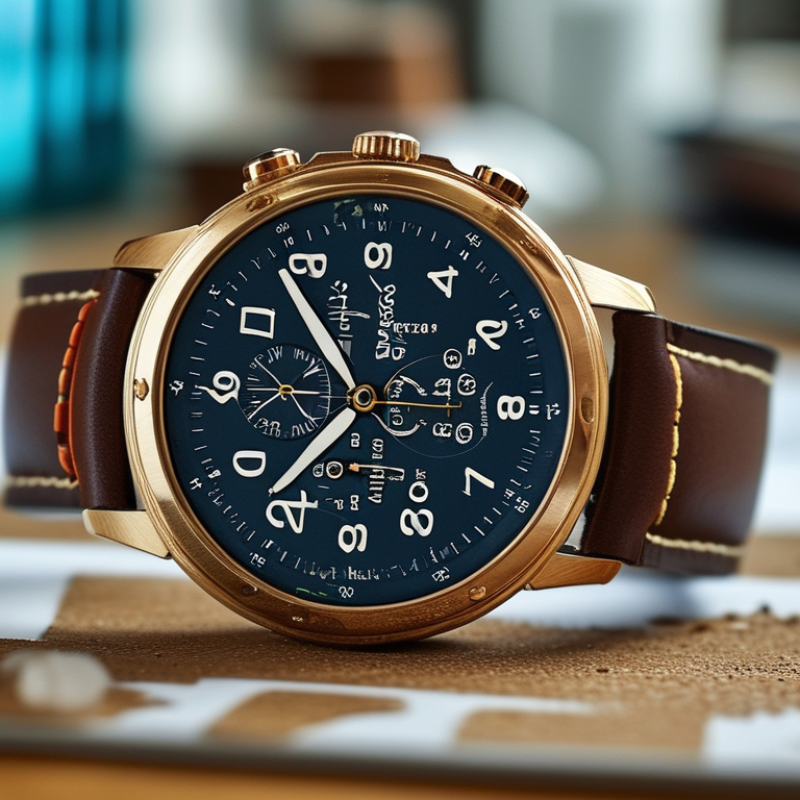
How to Choose Smart Watches for Global Sourcing?
Define sourcing goals before comparing suppliers. A low-cost watch may fail if your market expects accurate health tracking. Decide whether your priority is fitness, communication, safety, style, or basic notifications. Set measurable targets for battery life, display quality, durability, software stability, and acceptable defect rates. I once focused too heavily on unit price and underestimated packaging and after-sales support. That mistake increased the real sourcing cost.
Tips: Write a one-page sourcing brief. Include target price, order volume, delivery window, testing standards, and required documents. Ask suppliers for sample units, not only catalog photographs. Test charging, touch response, strap comfort, and battery performance for several days. Small details matter.
Target markets often have different user expectations. Office workers may value discreet designs and reliable alerts. Outdoor users may need brighter screens, stronger cases, and dependable location functions. Older users may prefer larger text and simpler menus. Consider language support, climate, local charging habits, and network compatibility. Interview potential users before finalizing specifications. Their feedback can challenge your assumptions. A watch that feels excellent in one market may feel confusing elsewhere. Review sample results with an independent testing professional when possible. Keep records of test dates, failures, corrective actions, and supplier responses. Reliable sourcing depends on evidence, not attractive promises.
| Sourcing Goal | Target Market | Primary User Need | Recommended Product Profile | Key Hardware Specifications | Connectivity and Software | Compliance Considerations | Sourcing Priority |
|---|---|---|---|---|---|---|---|
| Entry-Level Volume | Price-sensitive markets in Asia, Latin America, Africa, and Eastern Europe | Basic activity tracking, notifications, alarms, and timekeeping | Simple interface, lightweight body, durable strap, and low total landed cost | Color display, step counter, heart-rate sensor, 3 to 7 days of typical battery use, water-resistant enclosure | Bluetooth Low Energy, Android and iOS compatibility, multilingual companion application | Radio requirements for each destination market, battery transport rules, restricted-substance requirements, and product safety testing | Unit cost, minimum order quantity, defect rate, packaging efficiency, and after-sales replacement process |
| Fitness and Wellness | Urban consumers in North America, Europe, Australia, and developed Asian markets | Workout tracking, sleep insights, heart-rate trends, and healthier daily routines | Comfortable all-day wear, reliable sensors, clear data visualization, and strong application support | Optical heart-rate monitoring, accelerometer, gyroscope, workout modes, GPS or connected GPS, 5 ATM water-resistance target | Bluetooth Low Energy, GPS support, automatic firmware updates, data export options, and secure account access | Do not present wellness features as medical diagnosis; review privacy, cybersecurity, radio, battery, and electrical safety obligations | Sensor consistency, application usability, water-resistance validation, data privacy, and long-term software maintenance |
| Outdoor and Travel | North America, Europe, Oceania, and outdoor-tourism markets | Navigation, exercise recording, weather awareness, and reliable use in changing conditions | High-visibility display, physical buttons, rugged construction, and dependable location tracking | GNSS support, barometric or elevation-related sensor options, impact-resistant materials, 5 ATM or higher water-resistance target | Offline activity records, route import or export, Bluetooth Low Energy, and optional cellular connectivity | Validate environmental claims through testing; confirm radio bands, battery shipping documentation, and electrical safety requirements | Drop and vibration testing, GPS performance, screen readability, seal integrity, battery endurance, and repairability |
| Business and Productivity | Professional users and enterprise programs in Europe, North America, and Asia-Pacific | Calendar alerts, message previews, contactless payment capability, and discreet communication | Professional appearance, stable software, efficient notification handling, and strong account security | Bright display, microphone and speaker options, vibration motor, NFC hardware where required, and all-day battery target | Bluetooth Low Energy, Wi-Fi or cellular options, enterprise management compatibility, and regular security updates | Privacy and data-processing obligations, payment-security requirements where applicable, radio approvals, and cybersecurity controls | Security update policy, application integration, device management, warranty terms, and data-storage location |
| Family and Safety | Families, schools, and senior-care programs where local regulations permit | Emergency contacts, location sharing, reminders, and simple communication | Large text, simple controls, dependable alerts, comfortable fit, and clear consent management | High-contrast display, vibration alerts, location capability, optional SOS function, and tamper-resistant strap options | Bluetooth Low Energy, Wi-Fi or cellular options, geofencing capability where lawful, and caregiver notification functions | Children’s privacy, consent, location-data protection, age-appropriate design, radio approval, and battery safety | False-alert control, location accuracy, emergency workflow, privacy safeguards, customer support, and subscription transparency |
| Premium Design and Customization | Gift, fashion, hospitality, and private-label programs across global markets | Appearance, personalization, gift presentation, and differentiated user experience | Refined materials, interchangeable straps, customized user interface, and premium packaging | Aluminum or stainless-steel case options, scratch-resistant cover, AMOLED or equivalent display, and magnetic charging design | Bluetooth Low Energy, multilingual software, custom watch faces, application localization, and optional NFC | Material declarations, restricted-substance controls, packaging obligations, radio approvals, and intellectual-property clearance for artwork | Finish quality, color consistency, customization lead time, packaging protection, minimum order quantity, and serviceability |
