How to Choose the Best Battery Testers for Global Sourcing?
How to Choose the Best Battery Testers for Global Sourcing? The question requires more than comparing prices and screen sizes. Battery Testers must match the chemistry, voltage range, current accuracy, testing speed, and production environment of the target product. A lithium-ion pouch cell needs different controls from a lead-acid battery or a small coin cell. The wrong tester can produce clean-looking data that still supports poor decisions.
The market is expanding quickly. The International Energy Agency reported in its Global EV Outlook 2024 that electric vehicle battery demand exceeded 750 GWh in 2023, rising by about 40% from the previous year. The same report noted that global battery manufacturing capacity exceeded 2.5 TWh. More factories mean more suppliers, more specifications, and greater pressure to verify performance consistently. BloombergNEF’s 2023 Battery Price Survey also reported a 14% decline in average battery pack prices, showing how aggressively manufacturers are pursuing cost efficiency.
Cost matters. Accuracy matters more. A reliable sourcing review should examine measurement uncertainty, calibration records, channel stability, thermal protection, data export, and after-sales support. ISO/IEC 17025 principles are useful when evaluating calibration competence and traceability. IEC 62133-2 and UN 38.3 requirements may also shape the testing workflow, depending on the product and shipment route.
Do not trust impressive specifications alone. A 1,000-channel system may be unsuitable for a small laboratory. A low-cost tester may become expensive after repeated recalibration or failed batches. This guide compares practical selection criteria, supplier evidence, and overlooked risks for global purchasing teams. Some assumptions will need testing in real conditions. That is the honest part.
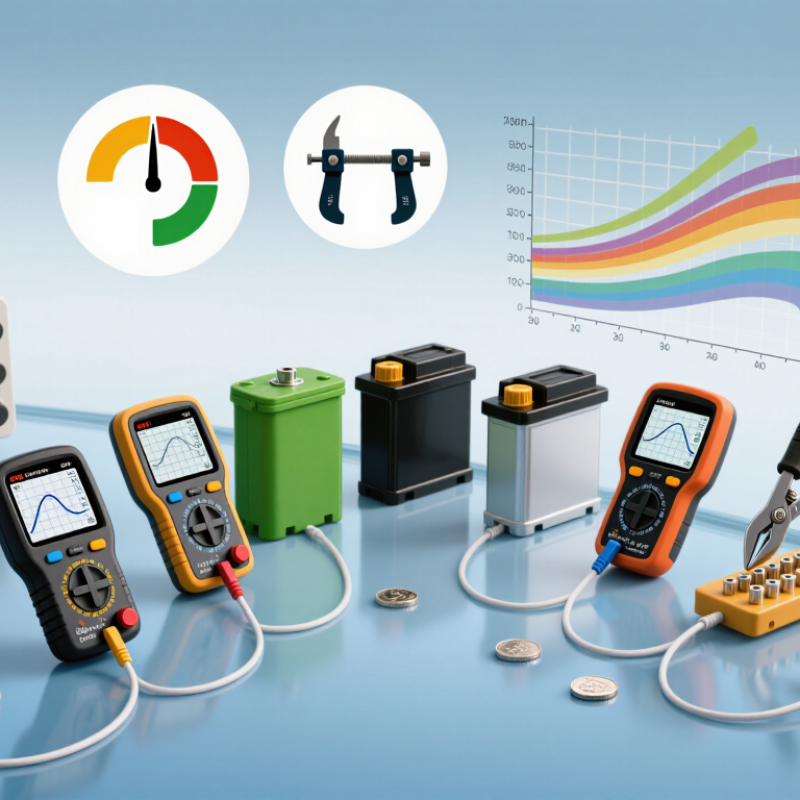
Define Battery Tester Types and Their Intended Applications
Choosing a battery tester starts with the battery’s intended use, not the instrument’s marketing label. A digital voltage tester suits quick checks on cells, packs, and stored inventory. It cannot confirm usable capacity. An internal-resistance tester reveals contact quality, aging, and possible imbalance. Results can shift with temperature, probe pressure, and surface corrosion. Small details matter. A load tester applies controlled current and measures voltage drop during use. It fits service screening for vehicle, backup, and portable power batteries.
A capacity analyzer is better for endurance claims. It discharges a battery under defined conditions and records ampere-hours or watt-hours. This process takes time. A pulse tester supports batteries exposed to short, heavy current demands, such as motors or communication equipment. For rechargeable packs, a battery cycler evaluates charge and discharge behavior across repeated cycles. A pack diagnostic tester may also inspect balancing, temperature sensors, and protection responses. Do not treat these tools as interchangeable. They answer different questions.
For global sourcing, define the application before comparing quotations. List chemistry, nominal voltage, capacity range, cell count, connector type, and expected test volume. Ask suppliers for accuracy data, calibration records, operating limits, and sample reports. Check whether the tester supports local power requirements and clear user instructions. In my reviews, an impressive current rating sometimes hid weak low-current accuracy. That was an expensive lesson. Test a representative sample before approval. Include warm and cool conditions when the battery will face seasonal transport or storage. Some specifications remain unclear until real samples expose them.
Assess Key Testing Specifications for Different Battery Chemistries
How to Choose the Best Battery Testers for Global Sourcing?
Battery chemistry determines the tester’s essential specifications. The International Energy Agency reported nearly 14 million electric cars sold globally in 2023. This growth increases demand for accurate lithium-ion validation. A suitable tester should support constant-current and constant-voltage charging, programmable discharge, and precise energy measurement. Check voltage range, current accuracy, channel consistency, and temperature control. Small errors become expensive across thousands of cells.
Different chemistries require different evidence. Lithium-ion testing needs cycle-life control, pulse testing, internal-resistance measurement, and thermal monitoring. Nickel-metal hydride cells may require delta-voltage detection and careful overcharge evaluation. Lead-acid batteries need conductance, capacity, and high-current discharge tests. The International Energy Agency also notes that battery manufacturing capacity is expanding rapidly, making supplier verification more important. However, a higher current rating does not automatically mean better testing. I have seen unsuitable equipment produce clean-looking graphs and unreliable conclusions.
Tips: Request raw test files, calibration records, and uncertainty data. Compare tester readings with a certified reference cell. For global sourcing, confirm input voltage, software language, data-export formats, and local service support. The IEC 62660 series can guide lithium-ion cell performance and reliability checks. Still, standards cannot replace practical sampling. Test cells from different production lots, temperatures, and storage periods. Perfect repeatability is unlikely, so document every exception.
Compare Accuracy, Safety Features, Interfaces, and Operating Requirements
When sourcing battery testers across regions, accuracy should be checked under real conditions, not only brochure claims. I compare readings with a calibrated reference meter at low, medium, and near-full charge levels. Repeated tests expose drift. Look for stated voltage, current, resistance, and capacity tolerances. A clear calibration interval matters. One overlooked detail is test-lead resistance. It can distort results on small cells. I have seen inexpensive units pass a quick inspection, then disagree after warming on a busy production bench.
Safety features should match the operator and battery chemistry. Reverse-polarity protection, replaceable fuses, insulated terminals, over-temperature control, and automatic cut-off reduce preventable damage. The enclosure should remain stable when thick cables pull against it. Do not assume a warning buzzer is enough. Verify protection through documented tests, not optimistic descriptions. For interfaces, a bright display helps under warehouse lighting, while USB or serial output supports traceable records. Wireless access may be convenient, but poor pairing can interrupt inspections. Physical controls still help when gloves or dust make touch screens unreliable.
Operating requirements often decide whether a tester performs consistently after delivery. Check its input-power range, adapter options, temperature limits, humidity tolerance, and warm-up time. Confirm whether software supports the required file format and local language. Data export should preserve timestamps, operator details, and test conditions. Training should be practical, with sample cells and clear fault messages. I would not ignore update procedures. They are easy to overlook. A unit needing frequent manual adjustments may look affordable, yet consume more labor than expected. My own evaluations are not perfect, so I record rejected samples and revisit the test method before approving a shipment.
How to Choose the Best Battery Testers for Global Sourcing?
Comparison of common battery tester categories using a normalized 1–5 score. Higher scores indicate stronger performance, safety capability, interface readiness, or lower operating burden. The operating-requirement score represents ease of deployment, not measurement performance.
Benchtop and production systems generally provide stronger control, traceability, and safety integration, while handheld testers usually require less setup. Final sourcing decisions should verify calibration evidence, voltage and current ranges, overload protection, data export functions, and compliance with applicable battery transport and safety requirements such as UN 38.3, IEC 62133-2, or UL 2054.
Verify Supplier Quality, Certifications, Production Capacity, and Support
How to Choose the Best Battery Testers for Global Sourcing?
A reliable battery tester starts with a reliable supplier. During sourcing audits, I check test accuracy, calibration records, and measurement stability. A tester should handle the battery types, voltage ranges, and testing cycles required by your products. Ask for recent inspection reports, sample results, and clear testing procedures. Do not accept vague claims. Request evidence.
Certifications also need careful review. Confirm that documents match the supplier’s legal company name, factory location, and actual equipment. Check issue dates and testing scopes. A certificate alone does not prove consistent quality. Review production capacity through equipment lists, staffing levels, maintenance records, and recent order history. A supplier may promise high output, but factory scheduling can reveal bottlenecks. Capacity claims are sometimes optimistic.
Tips: Send identical sample batteries to several suppliers. Compare readings, repeatability, and reporting speed. Ask how quickly they replace faulty equipment and train operators. Support matters after purchase. Useful support includes remote guidance, spare parts, manuals, and realistic response times. I also recommend a small trial order before full production. It costs more time. Still, it can expose weak documentation or unstable testing practices early. No evaluation is perfect, so record your assumptions and revisit them when production conditions change.
Evaluate Total Sourcing Costs, Logistics, Compliance, and Long-Term Value
How to Choose the Best Battery Testers for Global Sourcing?
A low purchase price can hide expensive sourcing problems. Evaluate the complete cost, including tooling, packaging, spare probes, inspection, and replacement parts. A tester may cost 80 dollars, yet its delivered cost can exceed 140 dollars after freight, duties, and local handling. Request a clear quotation with Incoterms, carton dimensions, gross weight, and minimum order quantities. One overlooked detail, such as oversized packaging, can raise air-freight costs sharply.
Logistics also affect product reliability. Check whether the tester includes batteries, adapters, or sensitive electronic components requiring special handling. Confirm lead times for calibration and repairs before placing a bulk order. Compliance deserves practical attention. Ask for current test reports, declarations, safety information, and applicable electromagnetic compatibility evidence. Requirements can vary by destination, so independent verification is wise. Paperwork alone is not proof of consistent quality.
Tips: Compare at least three suppliers using the same cost template. Test samples under real warehouse conditions. Record readings from a reference battery. Inspect the device after vibration and temperature changes. I would not rely on one impressive sample. That approach has disappointed many buyers. Long-term value depends on measurement stability, software support, training, and accessible replacement parts. A slightly higher-priced tester may reduce rejected shipments and repeated inspections. Still, estimate its payback honestly; not every advanced feature will improve your process.