Financing

If you are interested in financing to fund your Bay-Lynx purchase, we recommend that you connect with Easylease Corp., a Canadian-based leasing and finance company that offers premier equipment leasing and financial services. They are focused on making it easier than ever before for companies to overcome cash flow and resource constraints to acquire the assets they need to grow their business.

Leasing through Easylease Corp. can offer several benefits:

  • Conserve Cash Leasing
  • 100% Financing
  • No Pre-Payment of Taxes
  • Preserve Lines of Credit
  • Potential Income Tax Benefits
  • Pay as You Profit
  • Match Revenue with Expenditures
  • Simple, Convenient Process
  • Tailored Payments

Click here for your Canadian instant lease quote >>

For US customers, Click here for your instant lease application >>

How to Choose the Right Mixer Truck for Your Project?

Choosing the right mixer truck for your project can significantly impact its success. John Smith, a leading expert in the construction industry, once said, "The right mixer truck can make all the difference." His words highlight the importance of this decision.

Mixer trucks are not just vehicles; they are essential tools for any construction site. They transport concrete efficiently while ensuring its quality. Selecting the right model depends on factors like load capacity and project size. A small site may not need a large truck, while a major project may require a high-capacity mixer truck.

Many people overlook the specs of mixer trucks. Sometimes, they focus too much on price. A cheaper option may lead to increased costs later. Reflection on project needs is crucial. A well-chosen mixer truck contributes to smoother operations and better results. When in doubt, consulting with experts can provide clarity.

How to Choose the Right Mixer Truck for Your Project?

Understanding the Purpose of Mixer Trucks in Construction Projects

Mixer trucks play a critical role in construction projects. They ensure that concrete mixes are transported efficiently. This is key for maintaining the integrity of the mix during transit. Fresh concrete is essential for quality work. If it sits too long, it begins to set. That can lead to problems on the site.

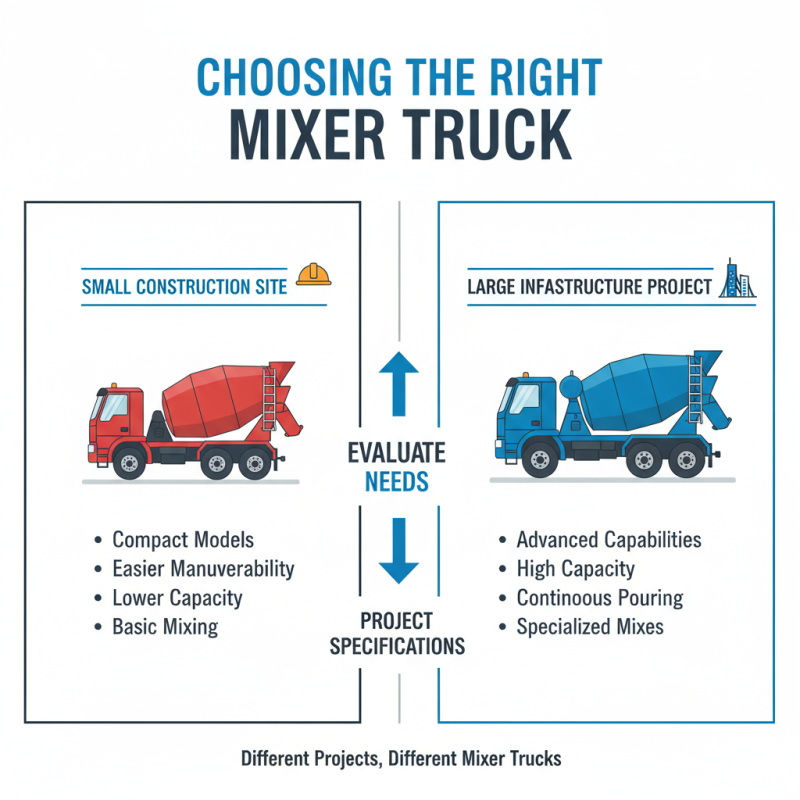
Choosing the right mixer truck involves understanding its purpose. For small projects, a smaller mixer may suffice. Larger projects often require bigger trucks that can handle larger batches. Capacity is important, but consider the delivery speed too. Sometimes, having multiple smaller trucks can be more effective. It can lead to better site management.

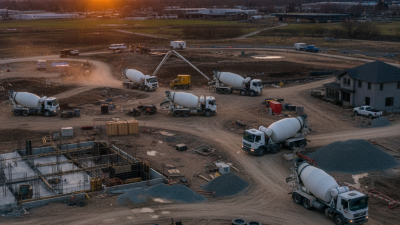
Projects vary widely. Each has its unique challenges. In some cases, access roads can be narrow. A larger mixer truck may struggle to deliver concrete in those areas. Planning ahead helps avoid costly delays. Recognizing these details can make or break a project. Adapting to the specific needs of each job site is crucial.
Evaluating Your Project Requirements for Mixer Truck Specifications

How to Choose the Right Mixer Truck for Your Project?

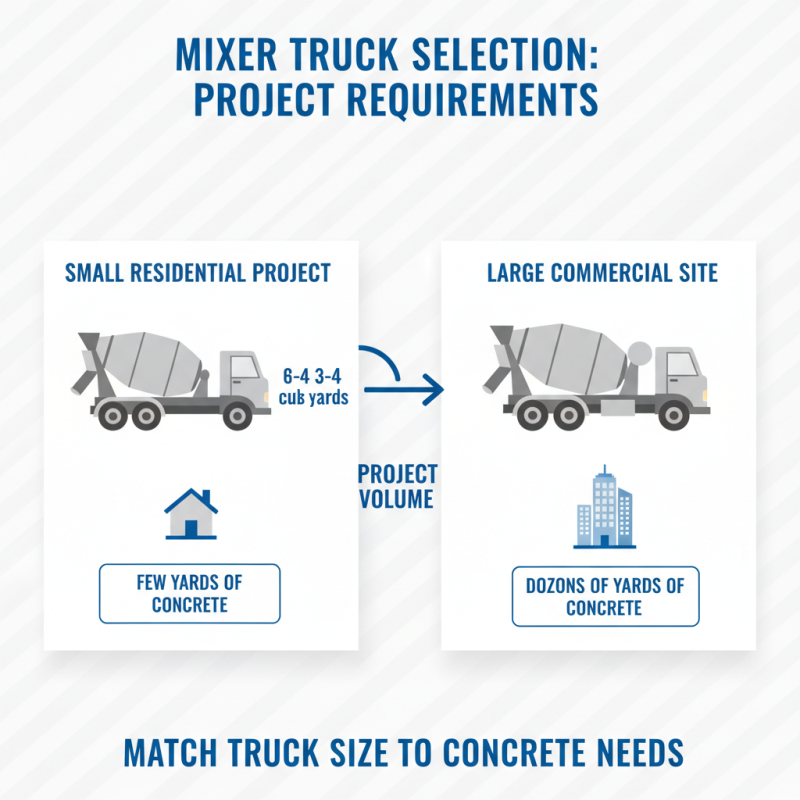
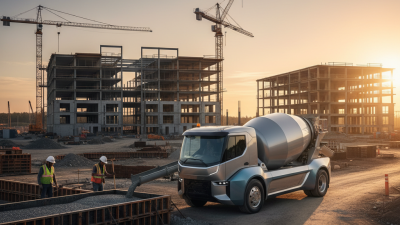
When choosing a mixer truck, project requirements are key. Assess the volume of concrete needed for the job. A small residential project may need just a few yards. In contrast, large commercial sites might require dozens. Understanding your project scale helps refine your choice.

Pay attention to mixer truck specifications. Consider the drum capacity and mixing speed. A truck with a higher capacity can reduce the number of trips needed. That can save time and costs. But this might not suit small projects well. Evaluate your timeline. Fast curing times require efficient mixing. If the truck can't keep up, you risk delays.

Remember to think about maneuverability. Urban sites may have tight spaces. A larger truck might struggle to navigate. In some cases, smaller equipment is more effective. Reflect on your layout and location. Choosing the right truck isn’t just about specs. It’s about finding the right fit for your unique project needs.

Key Features to Consider When Selecting a Mixer Truck

Choosing the right mixer truck involves understanding key features that influence performance and efficiency. One crucial aspect is the drum capacity. Trucks typically range from 6 to 12 cubic meters. A larger drum can mix more concrete but may not always be necessary for smaller projects. According to industry reports, optimal drum size can enhance productivity by up to 25%. Being aware of your project's scale can guide this decision.

Another important feature is the mixer type. Planetary mixers offer better mixing efficiency, while traditional drum mixers may suffice for simpler tasks. Industry studies indicate that mixing efficiency directly impacts the quality of concrete. Improper mixing can lead to inconsistent strength, affecting the final product. This makes the choice of mixer critical. It’s essential to evaluate the specific needs of your project, as different conditions can influence the effectiveness of the mixing process.

Additional factors include the truck's maneuverability and maintenance requirements. Some models may excel in tight spaces but require more frequent servicing. Balancing performance with ease of use can be challenging. Furthermore, understanding fuel efficiency is vital. An inefficient truck can inflate operating costs unexpectedly. Make sure to research specifications thoroughly. Every detail counts in ensuring that your mixer truck aligns with project expectations.

How to Choose the Right Mixer Truck for Your Project? - Key Features to Consider When Selecting a Mixer Truck

Feature Description Importance Recommended Specifications
Drum Capacity The volume of concrete the drum can hold. Essential for matching project scale. 6-12 cubic meters
Engine Power The power of the mixer truck's engine. Affects performance and fuel efficiency. 250-400 HP
Weight The total weight of the mixer truck. Impacts transport and maneuverability. 18,000-30,000 lbs
Maneuverability Ease of driving in tight spaces. Important for urban projects. Short wheelbase or articulated design
Fuel Type Type of fuel used by the engine. Affects operating costs and emissions. Diesel or CNG
Dump Type Method of unloading concrete. Crucial for efficiency at the site. Rear dump or lateral discharge

Comparing Mixer Truck Models and Brands for Your Needs

How to Choose the Right Mixer Truck for Your Project?

When considering a mixer truck for your project, evaluate the models and brands that best fit your needs. Different projects demand different specifications. For instance, a small construction site may only need a compact model. In contrast, larger infrastructure projects require more advanced mixing capabilities.

Tips: Assess your project's size and scope. It will help streamline your decision. Larger trucks can hold more material but may be challenging to maneuver in tight spaces.

Do not overlook the power and engine performance of the mixer truck. Some models offer higher horsepower but can be heavy on fuel. Remember that fuel efficiency matters in the long run. If unsure, gather feedback from team members who have operated various models. Their insights can shed light on performance nuances.

Another aspect to consider is the ease of maintenance. Some brands are more user-friendly than others. A complicated design may lead to additional costs over time. Regular maintenance schedules can make a significant difference in longevity.

Tips: Look for models with readily available parts. You do not want to wait for repairs to affect your project timeline. Always take the time to research all options carefully and consider your unique project requirements.

Budgeting and Cost Considerations for Renting or Buying a Mixer Truck

When considering a mixer truck, budgeting is crucial. Renting may seem cost-effective initially. However, long-term projects often benefit from purchasing. Analyze your project's duration and size. Calculate how much concrete you'll need. This will help determine the best option.

Think about additional costs. Maintenance, fuel, and insurance can add up quickly. Rental agreements might have hidden fees. Make sure to read the fine print. Sometimes, buying a truck may present unexpected challenges. Market fluctuations can affect resale value.

Evaluate your actual needs. Are you mixing large batches regularly? Or will smaller jobs suffice? Assessing your workload can clarify the decision. Renting could provide flexibility, while buying offers stability. Consider both paths carefully before committing. You may find solutions that are not immediately apparent.

Budgeting and Cost Considerations for Mixer Trucks