
Financing

If you are interested in financing to fund your Bay-Lynx purchase, we recommend that you connect with Easylease Corp., a Canadian-based leasing and finance company that offers premier equipment leasing and financial services. They are focused on making it easier than ever before for companies to overcome cash flow and resource constraints to acquire the assets they need to grow their business.

Leasing through Easylease Corp. can offer several benefits:

  • Conserve Cash Leasing
  • 100% Financing
  • No Pre-Payment of Taxes
  • Preserve Lines of Credit
  • Potential Income Tax Benefits
  • Pay as You Profit
  • Match Revenue with Expenditures
  • Simple, Convenient Process
  • Tailored Payments

Click here for your Canadian instant lease quote >>

For US customers, Click here for your instant lease application >>

10 Tips for Sourcing Sheet Metal Parts

Sourcing Sheet Metal Parts is no longer a simple price-comparison exercise. Material availability, bend accuracy, surface finish, tooling, and delivery reliability can change the real cost quickly. The 2024 Deloitte Global Manufacturing Industry Outlook identifies supply-chain resilience, digital visibility, and cost control as continuing priorities for manufacturers. Those priorities are visible on the factory floor: a delayed steel coil can leave a laser cutter idle, while one incorrect bend allowance can produce hundreds of unusable brackets.

Market data also shows why disciplined sourcing matters. Fortune Business Insights estimates that the global sheet metal fabrication market will continue expanding through the next decade, driven by automotive, electronics, construction, and industrial equipment demand. Grand View Research similarly highlights automation and precision manufacturing as important market forces. These trends create more supplier choices, but they do not remove technical risk.

Taiichi Ohno, the architect of Toyota’s production system, said, “Without standards, you cannot improve.” His principle applies directly to Sheet Metal Parts sourcing. Clear drawings, measurable tolerances, approved materials, and documented inspection standards create a practical baseline. Without them, supplier comparisons become misleading.

This guide presents 10 practical tips for sourcing Sheet Metal Parts with greater confidence. It considers supplier capability, prototype validation, quality records, logistics, and total landed cost. Some recommendations may not fit every project. That is the point. A low quotation can still hide rework, packaging damage, or missed production dates. Even experienced purchasing teams sometimes overlook small details, such as grain direction or deburring requirements. Careful sourcing is not perfect. It is repeatable, evidence-based, and willing to question assumptions.
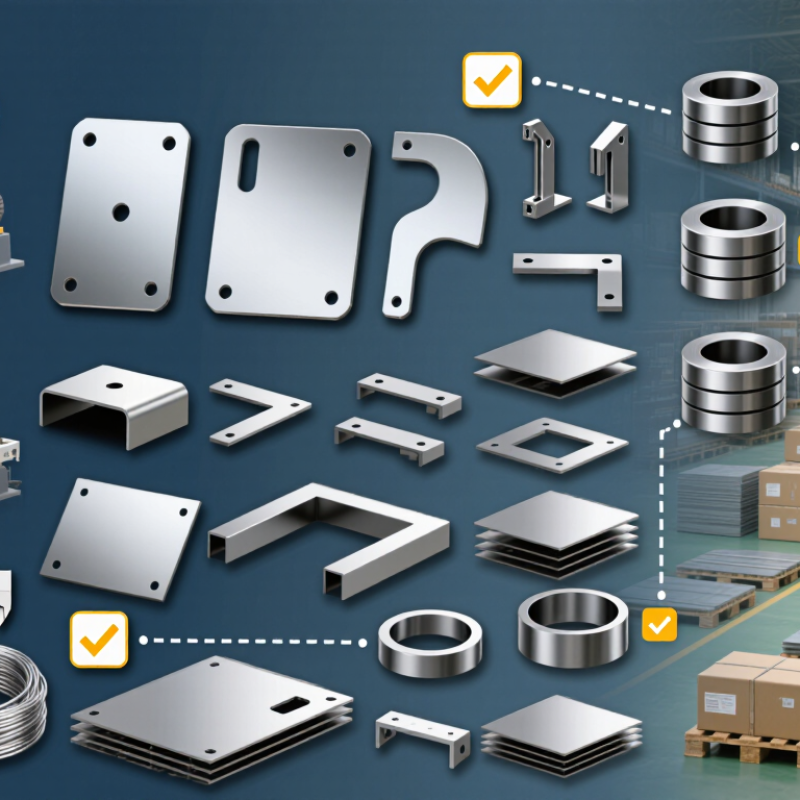
10 Tips for Sourcing Sheet Metal Parts

Define Sheet Metal Requirements with ASTM, EN, and ISO Material Standards

When sourcing sheet metal parts, define the material before comparing supplier prices. ASTM, EN, and ISO standards specify chemistry, mechanical properties, dimensions, and testing methods. They also reveal differences that a simple grade name can hide. An EN designation is not automatically equivalent to an ASTM grade.

State the required standard, grade, thickness, temper, surface condition, and coating in the drawing or purchase order. For example, specify a 2.0 mm sheet, allowable thickness tolerance, minimum yield strength, and corrosion protection level. Include the required test method. This prevents suppliers from selecting a cheaper material with similar wording but different performance.

Ask for a material certificate with each production batch. Check heat or lot numbers against the certificate and keep records for traceability. Confirm chemical composition and tensile results, not just the supplier’s compliance statement. For formed parts, request bend-test evidence when cracking could affect service life. Small samples can expose burrs, uneven coating, or springback before full production.

Be precise.

Use the latest applicable revision, but verify it with your engineering team. Standards change, and old drawings often remain in circulation. A cross-reference table can help, yet it should support engineering approval rather than replace it. I have seen “equivalent material” accepted too quickly, causing rework after forming. That shortcut looks efficient until the first failed inspection. Review tolerances, certificates, and sample parts together. Occasionally, the specification is still incomplete. Admit that early.

Screen Suppliers by ISO 9001 Certification, Capacity, and Lead-Time Data

Sourcing sheet metal parts requires more than comparing unit prices. Screen suppliers through ISO 9001 certification, available capacity, and verified lead-time data. The ISO Survey 2022 reported 1,265,216 ISO 9001 certificates across 187 countries and economies. Certification signals a quality system, not perfect parts. Ask for the current certificate scope, audit date, and corrective-action records.

Tip: Request capacity evidence. Review press-brake tonnage, laser-bed size, shift patterns, and recent utilization. The Federal Reserve’s Industrial Production and Capacity Utilization report tracks manufacturing capacity across major industries. A supplier operating near full utilization may quote confidently, then miss a short production window. Ask for a realistic weekly quantity, not a maximum machine rating. Capacity claims can be vague.

Tip: Test lead-time discipline before releasing a large order. Compare quoted days with production records from the past six months. The Institute for Supply Management’s Manufacturing PMI uses supplier deliveries as a recurring measure of factory timing pressure. Request separate dates for material purchasing, cutting, forming, finishing, inspection, and shipment. A 12-day promise may hide ten days of material waiting.

For a practical check, send a small batch with defined tolerances. Inspect hole positions, bend angles, burrs, and coating thickness. Record every delay. My own bias is to trust clean dashboards too quickly. That is a mistake. One late material coil can disrupt an otherwise capable supplier, so contingency capacity deserves a place in the screening score.

10 Tips for Sourcing Sheet Metal Parts - Screen Suppliers by ISO 9001 Certification, Capacity, and Lead-Time Data

Supplier Code ISO 9001 Certification Certification Validity Primary Processes Material Thickness Range Monthly Fabrication Capacity Typical Prototype Lead Time Typical Production Lead Time On-Time Delivery Rate Quality Acceptance Rate Engineering Support Screening Score
Supplier S-01 Certified Valid through 2027 Laser cutting, CNC bending, welding 0.8–12 mm 35–50 metric tons 5–7 business days 15–20 business days 96% 98.7% Dedicated application engineer 92
Supplier S-02 Certified Valid through 2026 Turret punching, bending, powder coating 0.7–6 mm 20–30 metric tons 6–8 business days 18–25 business days 94% 98.1% DFM review within 2 business days 87
Supplier S-03 In Process Expected in 2026 Laser cutting, CNC bending, assembly 0.8–10 mm 15–22 metric tons 7–10 business days 20–28 business days 91% 97.4% Design review available on request 76
Supplier S-04 Certified Valid through 2028 Laser cutting, robotic welding, finishing 1.0–16 mm 50–70 metric tons 8–10 business days 22–30 business days 97% 99.0% Full DFM and tolerance review 95
Supplier S-05 Certified Valid through 2027 Stamping, progressive dies, deburring 0.5–4 mm 80–120 metric tons 10–15 business days 30–45 business days 93% 98.4% Tooling and process engineering 89
Supplier S-06 Certified Valid through 2026 Waterjet cutting, machining, welding 2–40 mm 12–18 metric tons 8–12 business days 25–35 business days 90% 97.8% Material and tolerance consultation 81
Supplier S-07 Not Certified Internal quality system Laser cutting, bending, manual welding 0.8–8 mm 8–14 metric tons 5–7 business days 15–22 business days 88% 96.9% Basic drawing review 68
Supplier S-08 Certified Valid through 2027 CNC bending, laser cutting, assembly 0.6–10 mm 25–40 metric tons 6–9 business days 18–24 business days 95% 98.5% Rapid DFM feedback 90

Screening note: Compare certification status, verified production capacity, quoted lead time, on-time delivery, and first-pass quality before issuing a purchase order. Lead times are stated in business days and should be confirmed against current workload and material availability.

Compare Quotes Using DFM Reviews, Volume Breaks, and Cost Metrics

A low unit price can hide expensive assumptions. Compare quotes only after aligning material grade, thickness, finish, tolerances, and delivery terms. Ask each supplier for a DFM review before approval. The review should flag tight bends, short flanges, excessive hole density, and difficult deburring. One overlooked bend can add tooling, handling, and inspection time.

Request volume breaks at realistic levels, such as 10, 50, 250, and 1,000 parts. Separate one-time costs from recurring costs. Include programming, tooling, setup, material yield, scrap, finishing, inspection, packaging, and freight. A 2024 Federal Reserve capacity-utilization report placed U.S. manufacturing utilization near 77%. Idle capacity does not guarantee cheap production; setup time still consumes labor and equipment. The U.S. Bureau of Labor Statistics also tracks fabricated-metal producer prices, reminding buyers to review quote validity periods.

Use measurable cost metrics. Compare total landed cost, cost per accepted part, material utilization, setup cost per batch, and nonconformance allowance. Ask for the nesting estimate. A quote using a 60% sheet yield should not compete directly with one using 78% yield. I have sometimes focused too heavily on the lowest unit price. That was a mistake. A slightly higher quote may provide better process control and fewer rejected parts. Request sample inspection data, not only promises. Keep the assumptions visible.

10 Tips for Sourcing Sheet Metal Parts: Compare Quotes Using DFM Reviews, Volume Breaks, and Cost Metrics

Material weight is a useful cost metric when comparing sheet metal quotes. The values below are calculated from standard material densities and show the approximate mass of one square meter at common sheet thicknesses.

How to use this metric: Check whether quoted material usage is consistent with the selected alloy and thickness, then compare DFM feedback, setup charges, lead times, and volume-break pricing before choosing a supplier.

Validate Tolerances with ASME Y14.5, Bend Allowances, and CMM Reports

When sourcing sheet metal parts, tolerance language must be measurable and shared. Use ASME Y14.5 to define datums, feature control frames, and inspection boundaries. Do not accept vague terms such as “accurate” or “tight fit.” Ask the supplier how each critical feature will be verified.

A drawing may look complete, yet leave inspection decisions open. That gap often creates avoidable disputes.

Do not accept vague terms such as “accurate” or “tight fit.”

Bend allowances deserve equal attention. The finished flange position depends on material thickness, bend radius, grain direction, and forming method.

Confirm the K-factor or calculation method before approving flat patterns. Material temper can change springback. Small changes matter.

Request a first-article sample with measured bend angles and flange lengths.

In production reviews, I have seen parts meet overall dimensions but fail during assembly because the bend sequence was never discussed.

That assumption can fail.

CMM reports provide useful evidence, but they need context.

Check the part number, revision, datum alignment, probe strategy, temperature, and actual measured values.

A passing report can still hide a weak measurement plan.

Ask whether the report shows point data or only a pass-fail result. Compare repeated readings when tolerances are narrow. Also review how burrs, coatings, and formed edges were handled.

One practical improvement is to request marked-up photos beside the CMM report. This makes discrepancies easier to trace, although photographs cannot replace calibrated measurement records.

Control Production Through PPAP, First-Article Inspection, and SPC Data

Sourcing sheet metal parts requires more than comparing unit prices. A controlled supplier should show how production will remain stable after approval.

PPAP is useful when the customer defines its required submission level and evidence. The package may include a process flow, PFMEA, control plan, material certificates, and measurement results. These records connect the drawing to the shop floor.

First-Article Inspection checks the first production part against every relevant drawing requirement. Inspectors should verify bend angles, hole locations, flatness, coating thickness, and material grade. Photos and calibrated measurement records add useful context. A clean report matters.

However, a perfect first article does not prove long-term control. That is where SPC data becomes important.

Ask for control charts on critical dimensions, not only a final inspection sheet. Look for trends, unusual variation, and documented reaction plans. Capability results should match the customer’s acceptance criteria and measurement method.

Gauge repeatability can affect the result, so MSA should not be skipped. Suppliers should also explain how they control tooling wear, laser settings, and batch changes.

In practice, teams sometimes approve a process too quickly. That mistake can surface weeks later as burrs, shifting holes, or inconsistent springback.

PPAP, FAI, and SPC work best as connected evidence, not separate documents.