
If you are interested in financing to fund your Bay-Lynx purchase, we recommend that you connect with Easylease Corp., a Canadian-based leasing and finance company that offers premier equipment leasing and financial services. They are focused on making it easier than ever before for companies to overcome cash flow and resource constraints to acquire the assets they need to grow their business.
Leasing through Easylease Corp. can offer several benefits:
Click here for your Canadian instant lease quote >>
For US customers, Click here for your instant lease application >>
A Single Vsd Compressor adjusts its motor speed to match changing air demand. Unlike a fixed-speed compressor, it does not run continuously at one output level. A variable speed drive reads system pressure and changes motor speed accordingly. When production demand rises, the motor accelerates. When demand falls, it slows down.
The principle sounds simple. The details matter more.
Ron Marshall, a respected compressed-air systems consultant, states, “Compressed air is not free.” His warning applies directly to variable-speed systems. Electricity, pressure losses, leakage, and poor controls all influence operating cost. A Single Vsd Compressor can reduce wasted energy, especially where air demand changes throughout the day. It may slow during quiet periods, then respond quickly when several machines start together.
Inside the package, the electric motor drives an airend, often a rotary screw element. Sensors monitor pressure near the compressor or within the plant network. A controller compares measured pressure with the target setting. It then adjusts motor frequency and compressor speed. This process helps maintain steadier pressure than frequent load-and-unload cycling.
Still, variable speed is not magic.
Oversizing can reduce its efficiency. Poor installation can cancel expected savings. Rapid speed changes may also affect lubrication, cooling, and service intervals. These points deserve careful attention, because real factories rarely behave perfectly. A proper assessment should examine demand patterns, receiver capacity, leakage, pressure settings, and duty cycles before selection. Understanding these practical limits makes the technology clearer, more reliable, and easier to apply.
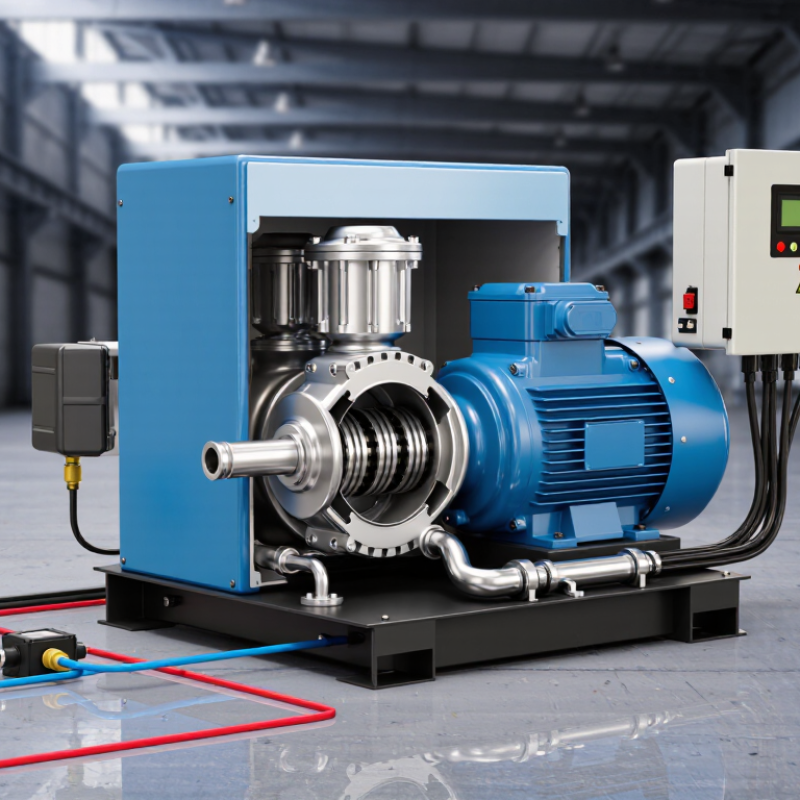
A single VSD compressor is one compressor equipped with a variable speed drive. The drive adjusts motor speed according to compressed-air demand. Unlike a fixed-speed unit, it does not simply switch between full output and standby. Sensors monitor discharge pressure, while a controller compares pressure with the selected setpoint. The motor then speeds up during heavy demand and slows down when demand falls.
This design can reduce unloaded running and unnecessary energy use. It is useful in workshops where air consumption changes throughout the day. For example, the compressor may run faster when several pneumatic tools operate together. It may slow to a quieter pace when only one small tool is active. However, a VSD compressor is not automatically efficient in every condition. Poor pressure settings, blocked filters, or frequent leaks can weaken its performance. That detail is easy to overlook.
Tips: Check for air leaks regularly, keep intake filters clean, and set pressure as low as equipment safely allows. Ask a qualified technician to review operating data, especially during seasonal demand changes. A pressure reading alone may not show the full picture. Power quality, ventilation, cycling patterns, and maintenance history also matter. In real installations, control settings are sometimes imperfect, so measured results deserve more trust than assumptions.
What Is a Single VSD Compressor and How Does It Work?
A single VSD compressor uses one motor and a variable speed drive to match air production with demand. The drive adjusts motor speed through an electronic inverter. A pressure sensor continuously measures the receiver or discharge line. When demand rises, the motor accelerates. When demand falls, it slows down instead of producing unnecessary air.
This control method can reduce unloaded running, pressure swings, and frequent stop-start cycles. The U.S. Department of Energy reports that compressed air can consume 10–15% of industrial electricity. Its compressed-air guidance also identifies 20–50% energy-saving opportunities in many systems. The International Energy Agency estimates that motor-driven systems use about half of global electricity. These figures explain why speed control deserves careful attention. However, energy savings are never automatic. Poor piping, leaks, or an oversized compressor can weaken the result.
Tips: Record pressure, flow, and power before installation. Check readings during shifts, weekends, and production changes. Set the pressure target as low as equipment safely permits. A small pressure reduction can matter, but operators should verify tool performance. Do not assume every load profile suits VSD control. A technical audit remains necessary.
| Data Dimension | Typical or Illustrative Data | How It Affects Compressor Output | Technical Explanation |
|---|---|---|---|
| Compressor configuration | Single compressor with one variable speed drive | The output of one compressor is adjusted continuously to match demand. | The drive changes motor speed instead of relying only on an on/off cycle or inlet throttling. |
| Primary control device | Variable frequency drive (VFD) | Motor speed can be increased or reduced according to system pressure or flow demand. | The VFD converts incoming electrical power and controls the frequency and voltage supplied to the motor. |
| Typical speed-control range | Approximately 30%–100% of rated speed, depending on compressor design | Allows reduced output during periods of lower air or gas demand. | The actual minimum speed is limited by motor cooling, lubrication, surge protection, machine stability, and manufacturer settings. |
| Pressure-control method | Closed-loop pressure control | The compressor increases speed when pressure falls and decreases speed when pressure rises. | A pressure sensor sends feedback to the controller, which compares actual pressure with the setpoint. |
| Illustrative rated motor power | 100 kW at 100% speed | Provides a reference point for comparing speed and power behavior. | This is an illustrative calculation value, not a brand-specific product rating. |
| Speed setpoint | 50% of rated speed | Lower compressor output for light demand conditions. | For a centrifugal compressor under ideal affinity-law assumptions, flow is about 50% and power is about 12.5% of the rated values. |
| Speed setpoint | 75% of rated speed | Moderate output for partial-load operation. | For a centrifugal compressor under ideal affinity-law assumptions, flow is about 75% and power is about 42.2% of the rated values. |
| Speed setpoint | 100% of rated speed | Maximum normal design output. | For the illustrative 100 kW reference, idealized power is 100 kW before motor, drive, and compressor losses. |
| Affinity-law relationship | Flow ∝ speed; pressure ∝ speed²; power ∝ speed³ | Small reductions in speed can produce larger reductions in theoretical power demand. | These relationships are most applicable to dynamic or centrifugal compressors operating within their intended range. |
| Output adjustment response | Continuous or finely stepped speed adjustment | Reduces pressure fluctuation compared with basic fixed-speed load/unload control. | The controller changes speed gradually to maintain the selected pressure or flow target. |
| Energy-saving opportunity | Highest during sustained partial-load operation | Avoids running the motor at full speed when the system requires less output. | Actual savings depend on compressor type, pressure requirements, leakage, control strategy, motor efficiency, and operating profile. |
| Motor starting behavior | Controlled acceleration | Reduces starting current and mechanical shock compared with across-the-line starting. | The drive ramps motor frequency and voltage instead of applying full line frequency immediately. |
| Protection functions | Overcurrent, overheating, overpressure, and low-speed protection | Helps prevent operation outside safe electrical and mechanical limits. | Dynamic compressors may also require anti-surge control; the exact protection package varies by compressor design. |
| Best-fit operating profile | Demand that varies significantly over time | Provides better matching between compressor capacity and changing system requirements. | A VSD may provide less benefit when demand remains close to full load for most operating hours. |
A single VSD compressor uses a variable speed drive to match motor speed with changing air demand. In many rotary screw systems, this reduces unnecessary cycling and energy loss. The process begins with a pressure sensor in the compressed-air line. It measures the actual pressure and sends that information to the controller.
The controller compares measured pressure with the selected setpoint. If demand rises, pressure starts to fall. The controller then instructs the drive to increase electrical frequency. The motor accelerates, and the air end produces more compressed air. When demand decreases, the drive slows the motor. Output falls with it.
The response is continuous.
During operation, the controller also monitors temperature, motor current, oil conditions, and operating limits. These safeguards help prevent overheating and mechanical stress. The compressed air passes through cooling and separation stages before entering the receiver or distribution system. A properly adjusted pressure band supports stable control. However, a lower setpoint is not always better. Excessive adjustments can cause unstable pressure or frequent speed changes.
In field service, technicians should compare display readings with external pressure and temperature measurements. Sensors can drift. Filters can clog. A VSD compressor may appear efficient while an air leak quietly increases its workload. Real performance depends on the entire system, not the compressor alone. This is where simplified explanations often miss the harder part.
A single VSD compressor uses one variable speed drive to control the motor’s rotation speed. The drive receives pressure or flow feedback from sensors. It then adjusts motor speed to match current demand. This avoids frequent full-load and idle cycles. In practical installations, stable control can reduce wasted energy, but performance depends on correct sizing and maintenance.
The motor connects directly to the compressor element, which produces compressed air. Depending on the design, this element may be oil-injected or oil-free. An inlet valve regulates incoming air, while a separator removes oil from the air stream in oil-injected systems. Coolers lower air and lubricant temperatures. Filters protect sensitive internal parts. These components work together inside a compact housing.
A controller acts as the compressor’s decision center. It reads pressure, temperature, speed, and operating-hour signals. Safety sensors can stop the machine during overheating, excessive pressure, or abnormal vibration. The VSD also needs clean power and adequate ventilation. Poor airflow can raise cabinet temperature and shorten electronic life. Technicians should inspect filters, connections, belts or couplings, and sensor readings during service visits. Small errors matter. A sensor that drifts slightly may cause unnecessary speed changes. No inspection routine is perfect, so comparing readings with actual plant demand remains worthwhile.
A single VSD compressor uses a variable speed drive to adjust motor speed as air demand changes. Instead of running fully loaded or stopping repeatedly, it can slow down during lighter production periods. This approach often reduces wasted energy, especially in facilities with uneven demand. Energy savings depend on the load profile, pressure settings, and correct equipment sizing. It is not magic.
The practical benefits are clear in workshops, packaging lines, vehicle service areas, and small manufacturing plants. A VSD compressor can help maintain steadier pressure when several tools start at different times. Operators may also notice fewer abrupt starts, lower mechanical stress, and smoother operation. In a workshop, for example, the compressor can respond when a spray gun or pneumatic wrench demands more air. That matters.
Installation still requires professional assessment. Engineers should review daily air consumption, peak demand, leakage, ventilation, and electrical capacity before selecting a unit. A compressor that is too large may operate inefficiently at low demand. A poorly adjusted pressure setpoint can waste energy every hour. Maintenance remains essential, including filter replacement, oil checks where applicable, condensate management, and drive inspections. Small loads expose weaknesses. Measurements after commissioning can confirm whether expected savings are real, rather than assumed. A practical monitoring plan should compare power use, operating hours, pressure stability, and service records over several months.