Financing

If you are interested in financing to fund your Bay-Lynx purchase, we recommend that you connect with Easylease Corp., a Canadian-based leasing and finance company that offers premier equipment leasing and financial services. They are focused on making it easier than ever before for companies to overcome cash flow and resource constraints to acquire the assets they need to grow their business.

Leasing through Easylease Corp. can offer several benefits:

  • Conserve Cash Leasing
  • 100% Financing
  • No Pre-Payment of Taxes
  • Preserve Lines of Credit
  • Potential Income Tax Benefits
  • Pay as You Profit
  • Match Revenue with Expenditures
  • Simple, Convenient Process
  • Tailored Payments

Click here for your Canadian instant lease quote >>

For US customers, Click here for your instant lease application >>

5 Tips for Choosing a Volumetric Concrete Mixer?

Choosing a volumetric concrete mixer is not a simple equipment purchase. It affects mix consistency, delivery timing, labor, and daily operating costs. On a busy jobsite, the right machine can produce fresh concrete beside the formwork. The wrong choice may create uneven batches, unnecessary maintenance, or frustrating delays.

This guide examines five practical tips for selecting a volumetric concrete mixer. It considers output capacity, aggregate storage, material accuracy, mobility, and service support. These factors matter when crews pour driveways, foundations, road repairs, or remote slabs. A compact mixer may suit narrow access, while larger projects may require higher production and longer material storage. Check the manufacturer’s rated output carefully. Real production can change with mix design, loading methods, weather, and operator experience. Brochure numbers are not everything.

Look closely at the weighing system and calibration process. Small measurement errors can affect strength, workability, and material waste. Ask how easily operators can adjust water, cement, and admixtures during production. Also inspect controls, discharge access, cleaning points, and replacement-part availability. These details often decide whether a machine performs well after several months. I have seen equipment selected for impressive capacity, yet its maintenance routine was overlooked. That was a costly lesson. A reliable decision combines specifications with your site conditions, crew skills, and concrete demand. Compare documented performance, request demonstrations, and speak with experienced users before committing.
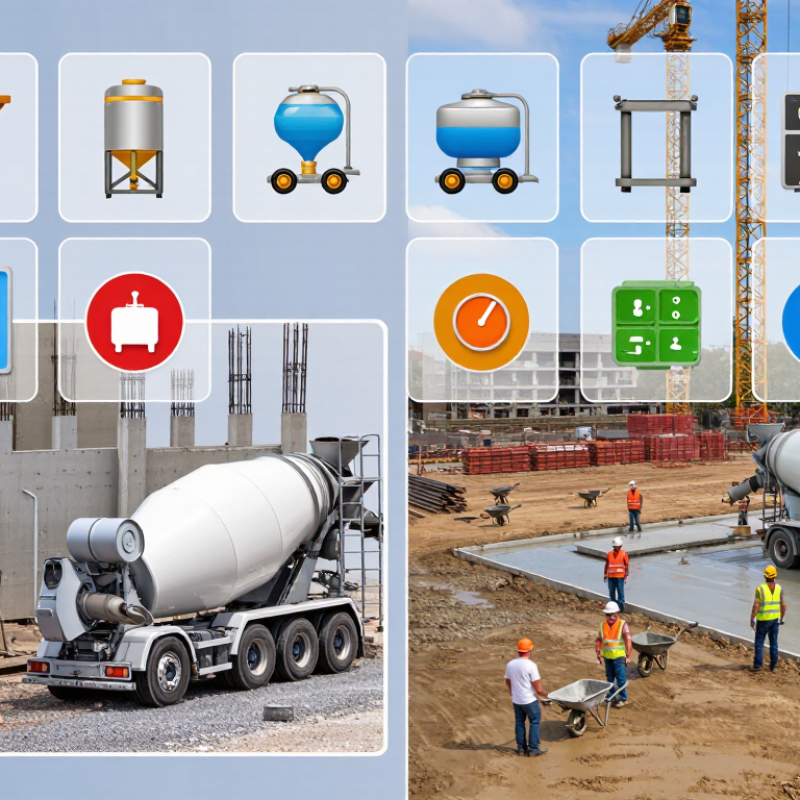
5 Tips for Choosing a Volumetric Concrete Mixer?

Define Your Concrete Mixing and Pouring Requirements

Before choosing a volumetric concrete mixer, define the work it must perform. Measure the required concrete volume, pour rate, and mixing time. A small driveway needs different capacity than a bridge foundation. Record the distance between the aggregate stockpiles and the pouring area. Limited space can affect mixer access and hose movement.

Check the concrete specification with your project engineer. Note the target strength, slump, aggregate size, and water-cement ratio. These details control the mixer’s material storage and calibration needs. If the mix changes during the day, confirm that the controls allow accurate adjustments. Keep written batch records. They support quality checks and help identify problems later.

Think about the actual site, not just the equipment brochure. Uneven ground, narrow entrances, dust, and poor lighting can slow production. Ask how quickly the mixer can wash out between batches. This is often overlooked. I have seen crews estimate volume too confidently and lose time through repeated material checks. Allow extra capacity for waste, weather delays, and uneven subgrade conditions. Still, buying excessive capacity may increase costs and reduce maneuverability. Recheck your estimates with recent project data. Your first calculation may be wrong.
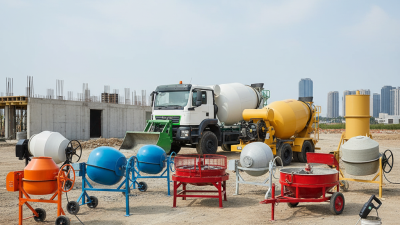

Compare Mixer Capacity, Output Rate, and Material Flexibility

5 Tips for Choosing a Volumetric Concrete Mixer?

A volumetric concrete mixer should match your daily work, not just its advertised size. Mixer capacity affects how long you can operate before reloading materials. A larger hopper helps on remote sites, where aggregate delivery may be delayed. However, excess capacity can increase transport weight and maintenance demands. Measure your typical pour size, travel distance, and available storage area.

Output rate deserves careful comparison. Manufacturers may list maximum production under ideal conditions. Real output usually drops with wet aggregates, uneven loading, or frequent repositioning. Ask for a usable hourly range instead of one impressive figure. I once underestimated cleanup and loading time on a small paving project. The mixer had enough capacity, but the crew still waited. That mistake changed our planning.

Material flexibility can protect your schedule. Check whether the mixer handles different aggregate sizes, cement types, moisture levels, and mix designs. Adjustable proportioning systems are useful when switching from footings to slabs or repair work. Confirm how quickly operators can recalibrate the mix. Keep moisture readings and test batches available. Small errors matter. A mix that looks right may still miss its designed strength or slump. Review maintenance access, calibration records, and operator training before purchase. These details often reveal more than a sales specification.

5 Tips for Choosing a Volumetric Concrete Mixer? – Compare Mixer Capacity, Output Rate, and Material Flexibility

Selection Tip Mixer Profile Typical Aggregate Storage Capacity Typical Cement Storage Capacity Typical Output Rate Material Flexibility Best-Fit Applications Key Selection Check
1. Match capacity to daily demand Compact or low-volume unit Approximately 3–6 yd³ of aggregate, depending on compartment configuration Approximately 0.5–1.5 yd³ of cementitious material About 4–8 yd³/h Suitable for standard concrete, small repair batches, flowable fill, and limited specialty mixes Residential work, patching, sidewalks, small slabs, and remote repair projects Confirm that the stored ingredients can cover the largest planned pour without frequent replenishment.
2. Compare output rate with placement speed Standard production unit Approximately 7–12 yd³ of aggregate Approximately 1–2 yd³ of cementitious material About 8–14 yd³/h Handles conventional concrete mixes across a broad range of water-to-cement ratios when properly calibrated Driveways, foundations, floors, footings, utility work, and general commercial construction Choose an output rate that matches the crew, forms, pump, and finishing capacity; excessive production can cause placement delays.
3. Allow for high-volume and continuous work High-capacity production unit Approximately 10–16 yd³ of aggregate Approximately 1.5–3 yd³ of cementitious material About 12–18 yd³/h Suitable for standard concrete, lean concrete, flowable fill, and selected fiber or admixture applications Road repairs, large slabs, airport maintenance, municipal work, and extended pours Check truck payload, access roads, loading logistics, and the availability of aggregate and cement replenishment.
4. Evaluate material flexibility Multi-compartment, recipe-adjustable unit Usually 7–16 yd³ of combined aggregate storage, with separate bins for different sizes Usually 1–3 yd³, with metered cement delivery About 6–16 yd³/h, depending on the recipe and moisture content Can produce different strengths, slumps, aggregate blends, colored concrete, and some fiber-reinforced mixes Projects requiring multiple mix designs or changing specifications during the same work period Verify the number of aggregate compartments, cement metering accuracy, admixture compatibility, and recipe-control range.
5. Consider difficult-site mobility and control Mobile or off-road-oriented unit Approximately 5–12 yd³, depending on chassis size and payload limits Approximately 0.75–2 yd³ About 5–14 yd³/h Works well with locally available aggregates and on-demand batching, provided materials are clean and consistently graded Remote sites, rural roads, trench work, emergency repairs, and locations with limited ready-mix access Check ground clearance, turning radius, axle load, water supply, calibration procedures, and local transport regulations.

Planning note: Capacity and output figures are typical industry planning ranges rather than guaranteed performance values. Actual production depends on aggregate moisture and grading, mix design, cement type, water availability, operator settings, loading time, site conditions, and required quality-control procedures.

Evaluate Mobility, Power Systems, and Jobsite Accessibility

5 Tips for Choosing a Volumetric Concrete Mixer?

Evaluate mobility before output. Measure gate widths, turning radii, overhead cables, and the softest ground. A mixer that reaches the site but cannot reverse safely is not mobile enough. The Federal Highway Administration’s 2023 Traffic Monitoring Guide emphasizes vehicle dimensions and turning paths when planning site movement. Use that logic at the jobsite entrance. Measure twice.

Check the power system against daily conditions. Diesel engines offer strong field autonomy, while electric or hybrid systems may reduce local noise and emissions. EPA SmartWay guidance estimates that heavy-duty diesel idling can consume about 0.8 gallons per hour. That cost grows during waiting, washing, or traffic control. Ask about auxiliary power, battery capacity, charging access, and backup operation. My own mistake was treating rated horsepower as real productivity. Material flow, incline, and cold weather can change performance sharply. More power is not always better.

Jobsite accessibility deserves a written test. Confirm whether the mixer can approach the pour without blocking emergency routes or public traffic. The U.S. Bureau of Labor Statistics recorded 1,075 fatal injuries among construction and extraction occupations in 2023. That figure does not prove mixer-related risk, but it reinforces disciplined movement planning. Check clearance, visibility, ground bearing, and washout space before delivery. Access fails fast. Leave room for corrections; real sites rarely match the drawing.

5 Tips for Choosing a Volumetric Concrete Mixer

Evaluate mobility, power systems, jobsite accessibility, production capacity, and maintenance requirements before selecting a mixer.

The chart uses a practical 1–10 evaluation scale for common jobsite selection criteria. Higher scores indicate greater importance when matching a volumetric concrete mixer to frequent site conditions. Narrow access roads, limited electrical supply, long travel distances, and variable batch requirements should receive particular attention.

Check Automation, Calibration, Maintenance, and Operator Safety

5 Tips for Choosing a Volumetric Concrete Mixer

Automation should make production easier, not harder to understand. Check whether the control panel displays material flow, mix ratios, water use, and batch volume clearly. Operators should adjust settings without guessing. Remote monitoring can help, but simple manual controls remain valuable when sensors fail. That happens.

Calibration deserves careful attention. Ask how quickly the aggregate, cement, and water systems can be checked on site. Look for accessible test points and written calibration procedures. During a trial, compare the programmed volume with the actual discharge. A small error can become a costly slab problem. Keep dated records, even when results look consistent.

Maintenance affects output and safety every day. Inspect conveyors, seals, hydraulic lines, guards, and water valves before operation. Choose a mixer with service areas that do not require awkward reaching. Grease points should be visible and clearly labeled. Ask about spare parts and technician support without relying on vague promises. I have seen rushed cleaning damage equipment, so the maintenance schedule must fit real working conditions.

Operator safety needs more than warning labels. Check emergency stops, reverse alarms, lockout points, lighting, and stable access steps. Training should cover moving parts, pressure hazards, dust control, and safe washout procedures. Written instructions should match the actual machine. If operators cannot explain a shutdown procedure, the design or training needs another review.

Assess Total Cost, Manufacturer Support, and Long-Term Value

A volumetric concrete mixer should be judged by total cost, not its purchase price. EquipmentWatch’s 2024 Cost Recovery Handbook separates depreciation, financing, repairs, fuel, tires, and utilization when assessing equipment ownership. Use that framework before comparing quotations. A low-cost machine may become expensive when cleaning takes longer, calibration drifts, or spare parts arrive slowly. Measure daily output, washout time, fuel consumption, and planned maintenance hours on similar jobs. Small differences become significant after hundreds of pours.

Manufacturer support also affects long-term value. Ask for technician response times, operator training, parts availability, and written service intervals. The 2024 AGC/Sage Construction Hiring and Business Outlook found that 94% of contractors struggled to fill craft positions. Simple controls and practical training can reduce dependence on scarce experienced operators. Still, support promises need testing. Request service records and contact details for current users. A polished sales presentation proves little.

KPMG’s 2023 Global Construction Survey reported that 37% of projects exceeded budgets, while 70% experienced delays. A mixer that stays productive during repairs may protect schedules better than a cheaper alternative. Compare its expected annual utilization with financing and resale assumptions. Be conservative. Fuel prices, seasonal demand, and unfamiliar operators can change the calculation quickly. I would also price one year of downtime risk, although that estimate is imperfect. That weakness deserves review.