
If you are interested in financing to fund your Bay-Lynx purchase, we recommend that you connect with Easylease Corp., a Canadian-based leasing and finance company that offers premier equipment leasing and financial services. They are focused on making it easier than ever before for companies to overcome cash flow and resource constraints to acquire the assets they need to grow their business.
Leasing through Easylease Corp. can offer several benefits:
Click here for your Canadian instant lease quote >>
For US customers, Click here for your instant lease application >>
Choosing the right Thermal Insulation Boards is rarely as simple as comparing thickness and price. A board that performs well in a dry roof may fail in a damp basement or exposed façade. Heat flow, moisture movement, fire performance, compressive strength, and installation quality all influence the final result.
Dr. Joseph Lstiburek, a respected building scientist, said, “The perfect wall has to control rain, air, vapor, and heat.” This principle provides a useful starting point. Good insulation must work as part of a complete building system. It should match the climate, wall assembly, expected loads, and local building requirements. Manufacturer test data matters, but real site conditions matter too. Small gaps around boards can create cold bridges. Poorly sealed joints can weaken an otherwise excellent design.
This guide, “10 Tips for Choosing Thermal Insulation Boards,” focuses on practical decisions that affect long-term performance. It examines thermal conductivity, board density, moisture resistance, fire classification, environmental impact, and compatibility with adhesives or membranes. It also considers handling on site. Can workers cut the boards cleanly? Will the edges remain stable during installation? These details are easy to overlook.
No product is perfect. That deserves attention. A cheaper board may increase labor costs. A high-performance product may require specialist installation. The safest choice is not always the thickest one. Review certified performance data, consult qualified professionals, and test the proposed assembly where uncertainty remains. Careful selection can improve comfort, reduce energy waste, and protect the building for years.
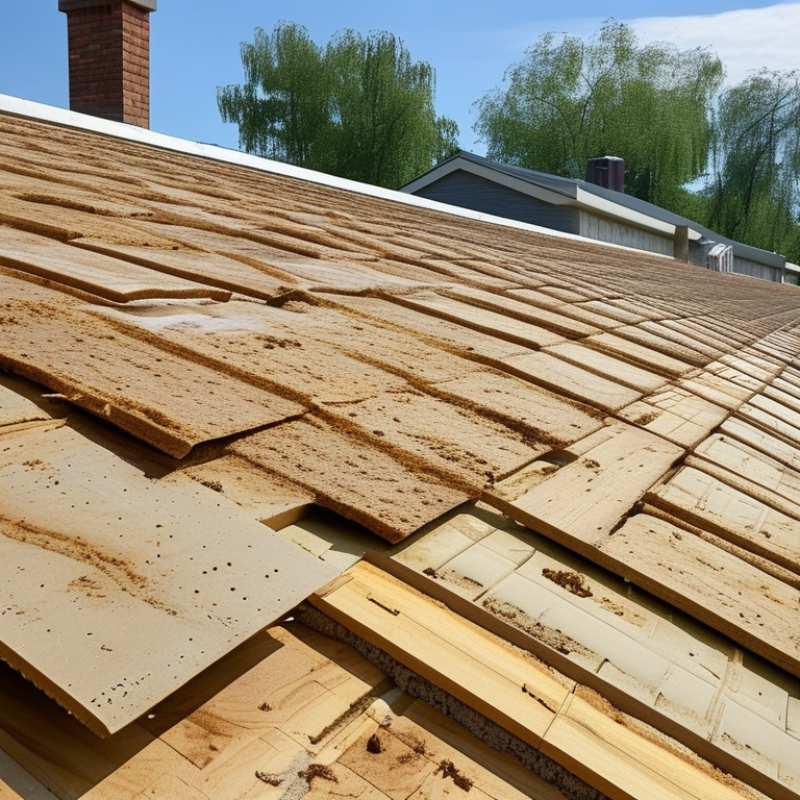
10 Tips for Choosing Thermal Insulation Boards
Define Thermal Insulation Boards and Their Main Applications
Thermal insulation boards are rigid panels designed to slow heat movement through building surfaces. They are made from materials such as mineral wool, expanded polystyrene, extruded polystyrene, polyisocyanurate, or foam glass. Their performance depends on thermal conductivity, thickness, density, moisture resistance, and installation quality. A lower conductivity value usually indicates better insulation, but it should not be judged alone.
These boards are commonly installed in external walls, cavity walls, roofs, floors, ceilings, and basement areas. Some types resist compression under flooring. Others provide stronger fire performance for high-rise wall systems. Moisture-sensitive products need careful detailing around foundations and wet rooms. The wrong board can absorb water, sag, or create hidden thermal bridges. Small gaps matter.
When choosing a board, compare its declared thermal resistance with local climate requirements. Check fire classification, vapor behavior, compressive strength, facing materials, and dimensional stability. Also review independent test data and installation guidance. A high R-value on paper can disappoint when joints are poorly sealed. This is a frequent site lesson, not a minor detail. Boards should fit the assembly, not simply the product brochure. Consult qualified building professionals where codes, fire safety, or structural loads are involved. Even experienced teams sometimes overlook condensation risk. Careful inspection remains essential.
Thermal insulation boards are rigid or semi-rigid panels designed to reduce heat transfer through building envelopes, roofs, floors, walls, foundations, and technical installations. Their performance depends on thermal conductivity, thickness, moisture resistance, fire behavior, compressive strength, durability, and installation conditions.
| No. | Selection Tip | Board Type / Definition | Typical Technical Data | Main Applications | What to Check Before Choosing |
|---|---|---|---|---|---|
| 1 | Start with the required thermal performance. | Thermal insulation board A panel that limits conductive, convective, and partly radiative heat transfer through a building element. | Thermal conductivity (λ) is commonly about 0.020–0.045 W/m·K for many rigid board products. Lower λ generally means more insulation for the same thickness. | External walls, roofs, floors, ceilings, basements, façades, and building services. | Compare declared or design thermal conductivity, required U-value, board thickness, thermal bridges, and local energy-code requirements. U-value depends on the complete construction, not the board alone. |
| 2 | Match the board to the location and exposure to moisture. | XPS Extruded polystyrene with a closed-cell structure and relatively low water absorption. | Typical λ: approximately 0.029–0.036 W/m·K. It commonly provides high moisture resistance and compressive strengths around 200–700 kPa, depending on grade. | Below-grade walls, foundation insulation, slab edges, inverted roofs, and floors subject to moisture or load. | Verify water absorption, freeze–thaw performance, compressive strength at the required design stress, compatibility with membranes, and protection from ultraviolet exposure. |
| 3 | Choose a low-conductivity board where space is limited. | PIR / PUR Rigid closed-cell polyurethane-based boards with a high insulation value per unit thickness. | Typical λ: approximately 0.022–0.028 W/m·K. Product performance may vary with temperature, ageing, facings, thickness, and test method. | Pitched roofs, flat roofs, cavity walls, internal wall upgrades, floors, and insulated panels. | Check fire classification, dimensional stability, joint detailing, facer compatibility, temperature limits, and whether the declared λ is based on long-term design conditions. |
| 4 | Consider fire safety as a design requirement, not an afterthought. | Mineral wool board Rigid or semi-rigid board made from mineral fibres, commonly produced from stone or glass raw materials. | Typical λ: approximately 0.032–0.040 W/m·K. Many mineral wool products are non-combustible, but the exact reaction-to-fire classification must be confirmed for the specific product. | External wall systems, rainscreen façades, fire breaks, roofs, partitions, ceilings, and acoustic applications. | Confirm reaction-to-fire and fire-resistance requirements for the whole assembly, density, wind-load resistance, water-repellent treatment, fastening method, and protection against air movement. |
| 5 | Select sufficient compressive strength for floors and roofs. | EPS Expanded polystyrene made from fused polystyrene beads; available in different densities and strength grades. | Typical λ: approximately 0.031–0.040 W/m·K. Compressive strength commonly ranges from about 70–300 kPa, depending on grade and application. | Cavity walls, external wall insulation, floors, foundations, flat roofs, and insulated formwork systems. | Check compressive stress at 10% deformation, long-term creep under sustained load, thickness tolerance, moisture exposure, edge profile, and suitability beneath screeds or roof membranes. |
| 6 | Use a board that provides both thermal and acoustic performance when needed. | High-density mineral wool Fibre-based board that can absorb airborne sound while reducing heat flow. | Thermal conductivity is commonly around 0.034–0.040 W/m·K. Acoustic performance depends on thickness, density, cavity depth, and the complete wall or ceiling assembly. | Internal partitions, suspended ceilings, façade cavities, plant rooms, and floors requiring sound control. | Review sound absorption coefficients, airborne and impact sound ratings, cavity design, airtightness, fire requirements, and whether the board will remain correctly supported without gaps. |
| 7 | Check moisture behavior and vapor control in the complete wall build-up. | Phenolic foam board Rigid closed-cell board offering low thermal conductivity and often supplied with protective facings. | Typical λ: approximately 0.020–0.025 W/m·K. Water vapor resistance and surface facings vary substantially by product. | Cavity walls, rainscreen façades, roofs, floors, and areas requiring relatively slim insulation thickness. | Assess vapor diffusion, condensation risk, water absorption, edge sealing, facer permeability, compatibility with adhesives, and the fire classification of the finished system. |
| 8 | Evaluate dimensional stability and long-term durability. | Cellular glass board Rigid, closed-cell insulation made from glass with an inorganic structure. | Typical λ: approximately 0.036–0.050 W/m·K. It is non-combustible, highly resistant to water vapor, and dimensionally stable; its exact compressive strength depends on grade. | Flat roofs, below-grade structures, foundations, cold-storage areas, industrial floors, and chemically demanding environments. | Confirm compressive strength, joint treatment, adhesive compatibility, thermal movement, substrate flatness, impact resistance, and detailing at penetrations and corners. |
| 9 | Consider environmental objectives and indoor comfort. | Wood-fibre board Rigid or semi-rigid bio-based board made from wood fibres, with thermal and moisture-buffering characteristics. | Typical λ: approximately 0.038–0.050 W/m·K. Higher density can improve heat-storage capacity and acoustic performance, while moisture behavior depends on the product and installation. | Timber-frame walls, roof insulation, external wall systems, internal retrofit, and renovation projects. | Check moisture design, water protection, density, fire treatment, biological durability, installation tolerances, declared environmental information, and compatibility with vapor-open assemblies. |
| 10 | Verify installation details, approvals, and lifecycle requirements. | System-compatible insulation board A board selected together with membranes, fixings, adhesives, render, cladding, screed, or roof-covering components. | Performance depends on board thickness, joints, fasteners, adhesive coverage, air tightness, thermal bridging, workmanship, and exposure during construction. | External thermal insulation systems, warm roofs, insulated façades, floor assemblies, retrofit projects, and specialist industrial enclosures. | Confirm relevant test standards, product certificates, installation instructions, fire and moisture design, warranty conditions, repairability, service life, waste handling, and local building regulations. |
Typical values are indicative ranges for common insulation-board categories. Always use the declared performance, design values, test standards, and installation requirements stated in the technical documentation for the specific product and building system.
