
If you are interested in financing to fund your Bay-Lynx purchase, we recommend that you connect with Easylease Corp., a Canadian-based leasing and finance company that offers premier equipment leasing and financial services. They are focused on making it easier than ever before for companies to overcome cash flow and resource constraints to acquire the assets they need to grow their business.
Leasing through Easylease Corp. can offer several benefits:
Click here for your Canadian instant lease quote >>
For US customers, Click here for your instant lease application >>
Fused Heterocyclic Systems combine two or more connected rings, often with at least one ring containing nitrogen, oxygen, or sulfur. This architecture appears across many areas of medicinal chemistry because it can present molecular features in compact, defined shapes. A fused ring may limit rotation and orient substituents toward particular regions of a protein binding site. In practice, that geometry can help researchers investigate binding interactions with greater precision. Small structural changes matter.
Their value is not simply that they look complex. A carefully chosen scaffold can support systematic changes to ring atoms, substituents, and stereochemistry. Researchers can then compare how these changes affect potency, selectivity, solubility, and metabolic stability. For example, replacing one ring nitrogen or adding a small methyl group may alter both protein contacts and physical properties. Results still require experimental testing; structure alone cannot predict a useful medicine.
Fused systems also bring real challenges. Their rigidity may limit the shapes a molecule can adopt, while increased aromaticity can contribute to poor solubility or nonspecific binding. Some scaffolds require lengthy synthesis, and a strong assay result does not establish clinical value. That distinction is easy to overlook. Thoughtful drug discovery therefore weighs molecular design against reproducible data, practical synthesis, and safety testing. This article explores why these ring systems attract attention, where they can offer advantages, and which limitations deserve careful consideration. They are useful tools, not shortcuts.
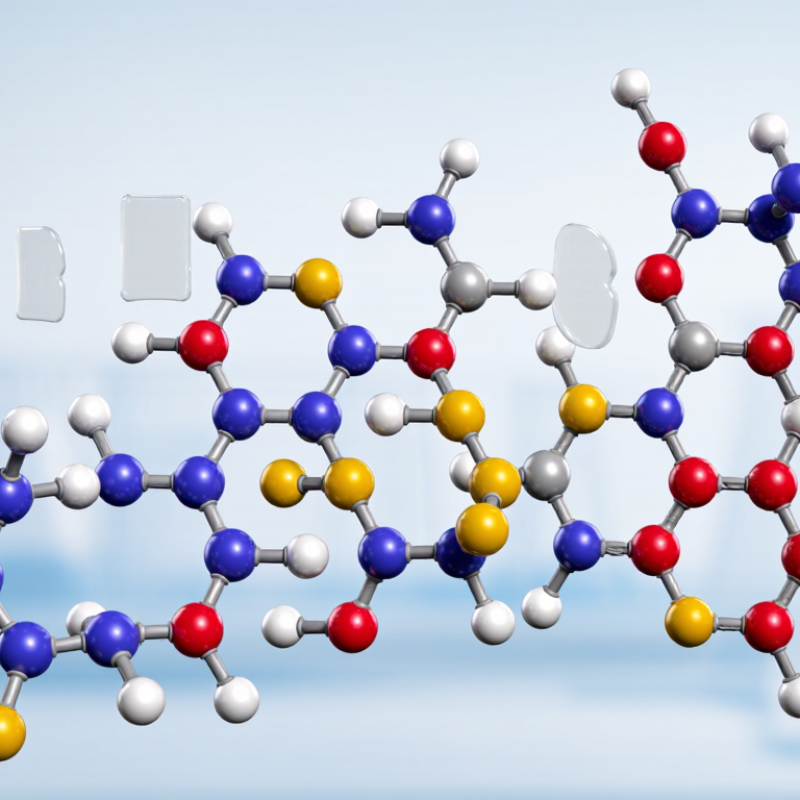
Fused heterocyclic systems are molecular frameworks in which two or more rings share a pair of adjacent atoms and the bond between them. At least one ring contains a non-carbon atom, such as nitrogen, oxygen, or sulfur. This shared edge distinguishes fused rings from linked rings, which connect at separate points, and spiro rings, which share only one atom. The fused framework may be aromatic, partially saturated, or fully saturated. Small structural changes can alter its shape, electron distribution, and interactions with a biological target. The name alone, however, does not predict how a compound will behave.
A 2014 Journal of Medicinal Chemistry survey of FDA-approved small-molecule drugs found that 59% contained at least one nitrogen heterocycle. That figure highlights the importance of heterocycles in medicinal chemistry, but it does not mean every fused system is a good drug-design choice. Researchers still assess solubility, metabolic stability, selectivity, and synthetic practicality. A rigid ring can help position functional groups precisely; it can also make a molecule harder to tune. That trade-off deserves attention.
Tips: Draw the shared bond clearly, then label each ring atom. Check whether the heteroatom sits in the fused core or in a side group. Compare close analogues experimentally. Structure is a useful guide, not a guarantee.
Fused heterocyclic systems join two or more rings along shared atoms, creating compact frameworks with fewer freely rotating bonds. This structure can hold substituents in a defined orientation, while ring atoms tune electron density across the molecule. Changing one carbon to nitrogen may shift basicity, hydrogen-bond acceptance, and behavior in water. Small edits matter. These effects are linked: stronger polarity may improve aqueous solubility but reduce passage through lipid membranes. Measured pKa, solubility, and permeability data are more useful than a structure-based guess alone.
Ring fusion often reduces flexibility, making binding geometries easier to study and refine. But rigidity is not automatically an advantage. A constrained shape may fit a protein pocket poorly, even when its chemical groups look promising. Planarity can encourage crystal packing and sometimes limit solubility; results depend on the complete molecule and test conditions. Medicinal chemists compare related compounds and check predictions against assays for binding, metabolism, and exposure. No shortcut works. Fused rings also vary in stability and synthetic accessibility. A striking scaffold still needs experimental validation; structure alone cannot settle how it will behave.
| Fused heterocyclic scaffold | Structural features | Potential effect on molecular behavior | Drug-discovery utility | Design considerations |
|---|---|---|---|---|
| Indole Fused benzene–pyrrole system | A planar aromatic framework; the pyrrole nitrogen generally acts as a hydrogen-bond donor and is not a conventional hydrogen-bond acceptor. | The aromatic surface can support hydrophobic and stacking interactions. The NH group can provide a directional hydrogen-bond interaction when appropriately positioned. | Offers a compact platform for exploring aromatic-pocket recognition and substituent-driven changes in binding orientation. | Planarity and aromatic surface area may contribute to poor aqueous solubility or nonspecific binding; substitution can alter these properties. |
| Quinoline Fused benzene–pyridine system | A planar bicyclic aromatic system with a pyridine-like ring nitrogen that can act as a hydrogen-bond acceptor. | The ring nitrogen can influence polarity, basicity, and recognition by polar binding-site residues. Its protonation state depends on the scaffold and environment. | Provides an aromatic surface together with a defined heteroatom interaction site; peripheral substitution can tune electronic and physicochemical properties. | Do not assume the ring nitrogen is protonated at physiological pH; measure or calculate ionization behavior for the complete molecule. |
| Benzimidazole Fused benzene–imidazole system | Contains two imidazole nitrogens with distinct roles: one is pyridine-like, while the other is pyrrole-like when bearing hydrogen. Tautomerism may occur. | Hydrogen-bonding patterns and apparent polarity can depend on tautomeric state, substitution, and pH. | Allows medicinal chemists to probe multiple polar interactions while retaining a rigid aromatic framework. | Consider tautomer populations and nitrogen substitution when interpreting binding poses, permeability, and measured properties. |
| Quinazoline Fused benzene–pyrimidine system | A planar fused aromatic core with two ring nitrogens that can serve as hydrogen-bond acceptors. | The nitrogen positions create a defined polar pattern; substituents can alter electron density and interactions around the fused ring. | Supports systematic exploration of heteroatom placement and substitution vectors in a relatively rigid scaffold. | Aromaticity and heteroatom placement alone do not establish potency or selectivity; these require experimental evaluation. |
| Purine Fused imidazole–pyrimidine system | A nitrogen-rich bicyclic aromatic framework. Donor and acceptor behavior depends on substitution and tautomeric form. | Its organized pattern of ring nitrogens can support specific hydrogen-bonding arrangements and recognition of nucleotide-like binding sites. | Useful for designing molecules that engage binding sites recognizing nucleobases or related heteroaromatic patterns. | Assess tautomerism, ionization, and competition with endogenous ligands where relevant. |
| Benzoxazole Fused benzene–oxazole system | A rigid aromatic framework containing oxygen and a pyridine-like nitrogen; these atoms provide potential hydrogen-bond acceptor sites. | The heteroatoms create a polar edge on an otherwise aromatic surface, helping shape local interactions and electronic distribution. | Offers a compact way to combine aromatic contacts with acceptor functionality and to vary substituent orientation. | Evaluate solubility and metabolic stability in the context of the full molecule; these cannot be inferred from the core alone. |
Why Choose Fused Heterocyclic Systems for Drug Discovery?
When a fused heterocycle meets a biological target, its joined rings present a defined shape. That shape can position key atoms near complementary features in a protein pocket. A ring nitrogen may accept a hydrogen bond, while a nearby carbonyl or donor group makes another contact. Small differences matter. Shifting one atom can change the angle or distance of an interaction.
The fused framework can also reduce molecular flexibility. A ligand may spend less energy adopting a binding-ready shape, though rigidity does not guarantee stronger binding. In a pocket, a flat ring surface might rest against an aromatic side chain, while an exposed heteroatom reaches toward water or a polar residue. These contacts depend on the target’s local geometry, not on the ring system alone. There is a trade-off: adding ring nitrogens can improve polar recognition, but may also affect solubility or membrane passage. It is easy to overread a promising docking pose. Structural data and measured activity are still needed, and even then, the picture may remain incomplete.
Fused heterocyclic systems join rings that share atoms, often placing nitrogen, oxygen, or sulfur within a compact scaffold. In drug discovery, this architecture can help position functional groups in a defined three-dimensional arrangement. That matters when a small structural change affects fit within a protein pocket. But rigidity is not always an advantage. No scaffold is magic.
During hit-to-lead optimization, researchers compare analogues with altered ring atoms, substituents, or fusion patterns. Replacing a carbon with nitrogen may change basicity and solubility; adding a group near a ring edge can affect steric fit or metabolism. These are design hypotheses, not guarantees. Teams assess them using biochemical and cellular assays, alongside measurements of solubility, permeability, and metabolic stability. A potency result alone can hide trade-offs.
Fused cores may reduce conformational flexibility, sometimes supporting binding, but they can also make synthesis and later modifications more demanding. Useful attachment points may be difficult to reach. A potent compound can still fail. Poor dissolution or rapid clearance may limit its prospects. Matched comparisons and repeat assays can strengthen structure–activity analysis, though noisy data remain a real constraint. In practice, a clean-looking model can still disagree with a measured assay.
Fused heterocycles can place several nitrogen, oxygen, or sulfur atoms within a compact, rigid framework. That geometry may improve target fit, but it can also make synthesis and property tuning less forgiving. A single change in ring position may alter basicity, solubility, or metabolic stability. Small details matter. Medicinal chemistry teams should compare matched analogues, track stereochemistry, and confirm structures early. In practice, a clean binding result is not enough; poor solubility can make the same compound difficult to test reliably.
Development planning must begin before a lead is selected. Measure aqueous solubility, permeability, and metabolic stability alongside potency, then check for reactive metabolites and off-target activity. Fused systems can have flat, aromatic surfaces, which may affect crystal packing and formulation. These risks need experimental checks, not assumptions from a structure drawing. The FDA’s 2023 Novel Drug Therapy Approvals report recorded 55 novel drug approvals across therapeutic types; it does not show that fused rings drove those approvals, but it underscores continued demand for viable drug candidates. IQVIA’s Global Use of Medicines 2024 report projected worldwide medicine spending above $2.3 trillion by 2028. That scale makes robust developability valuable. Still, early screens miss things. Repeat key measurements as compounds and formulations change.