If you are interested in financing to fund your Bay-Lynx purchase, we recommend that you connect with Easylease Corp., a Canadian-based leasing and finance company that offers premier equipment leasing and financial services. They are focused on making it easier than ever before for companies to overcome cash flow and resource constraints to acquire the assets they need to grow their business.
Leasing through Easylease Corp. can offer several benefits:
Click here for your Canadian instant lease quote >>
For US customers, Click here for your instant lease application >>
In the fast-paced world of construction, mobile concrete solutions offer flexibility and efficiency. These innovative services are increasingly popular among builders and contractors. Projects can change quickly, requiring adaptable solutions.
Mobile concrete services provide quick access to necessary materials. This is crucial for timely project completion. They minimize transportation time, reducing delays. However, not all mobile concrete options are created equal. Some may lack the quality or consistency needed for specific projects.
Choosing the right mobile concrete solution can be a challenge. Understanding your project requirements is essential. With various options available, it’s important to assess each choice critically. Exploring these ten top mobile concrete solutions can lead to better decisions for your construction needs.
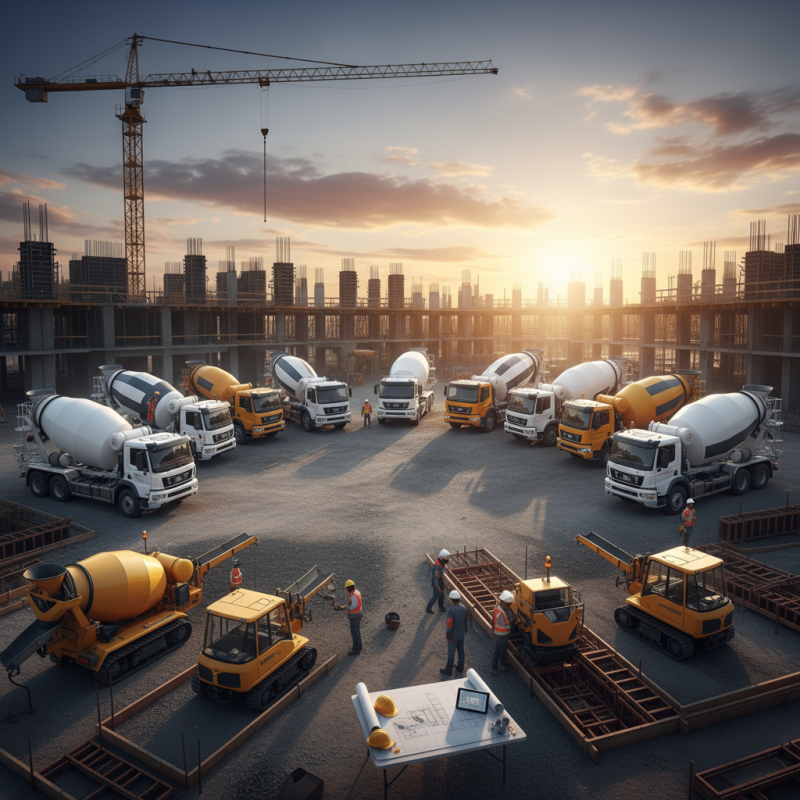
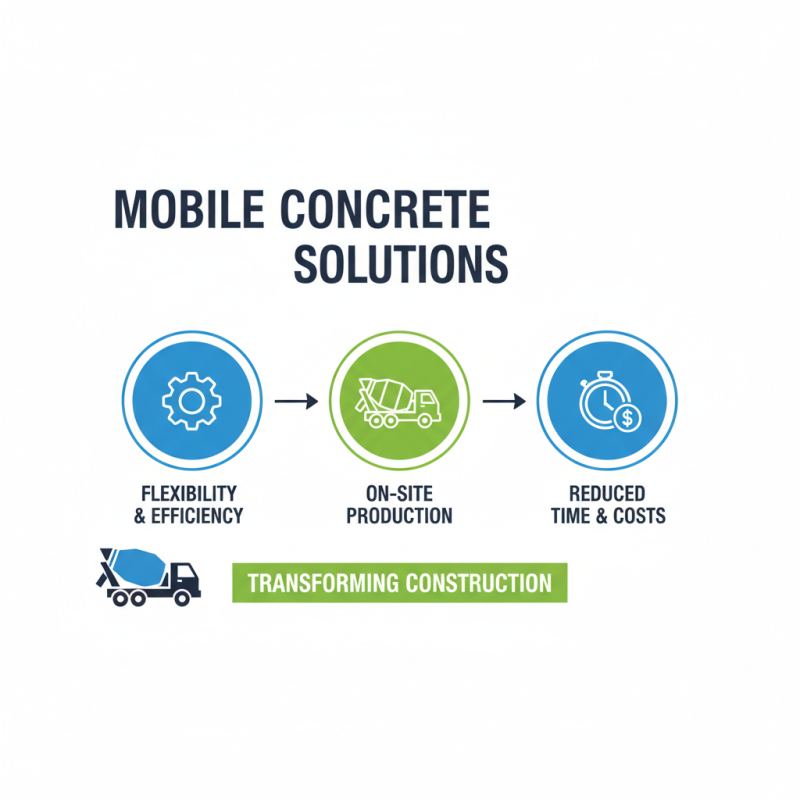
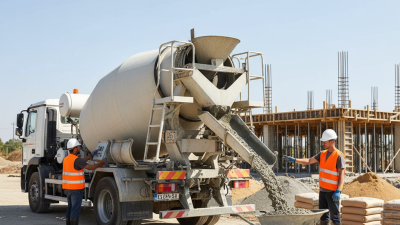
Mobile concrete solutions are transforming the construction industry. These innovative methods provide flexibility and efficiency in various projects. Using mobile mixers, workers can produce concrete on-site. This greatly reduces transportation time and costs.
One major benefit is the tailored concrete mix. Each project may require a different strength or type of concrete. With mobile solutions, adjustments can be made on-the-fly. However, sometimes, this can lead to inconsistencies. It’s essential to ensure proper monitoring during mixing.
Here are a couple of tips to consider: Always check the local regulations regarding concrete use. Some areas have strict guidelines. Additionally, invest time in training your personnel. Mixing concrete is an art. Proper training reduces the risk of mistakes. Be aware that not all equipment is equal in quality. Choosing the right tools can significantly impact the final product.
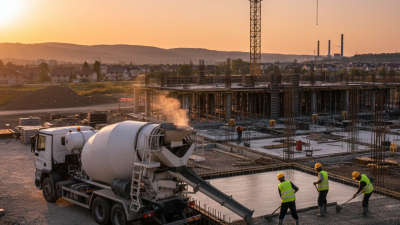
When selecting a mobile concrete mixer, certain key features are crucial for optimizing performance and efficiency. First, pay attention to the mixer’s capacity. A typical drum can vary between 1.5 to 8 cubic yards. According to industry reports, choosing the right capacity can directly influence job site productivity. Smaller projects may only need a mixer with a capacity of 1.5 to 3 cubic yards. However, larger projects benefit from a mixer with a capacity of 6 cubic yards or more.
Furthermore, consider the mixing technology used. The most efficient mixers utilize twin-shaft technology, which promotes faster mixing times. Reports from construction technology research indicate that twin-shaft mixers can reduce mixing time by up to 30%. This efficiency can greatly enhance workflow on busy construction sites.
Tips: Focus on the mobility of the mixer. The best models have robust tires and a compact design for easy transport. Maintenance is also vital. Regularly check for wear and tear to avoid costly repairs. A well-maintained mixer can last significantly longer and perform better.
Finally, assess the layering of materials during mixing. A poor mixer can lead to uneven concrete quality. Research suggests that inconsistency can result in up to 20% material waste. It’s critical to ensure that any mixer you choose has effective proper mixing capabilities. A thorough inspection can save time and resources down the line.
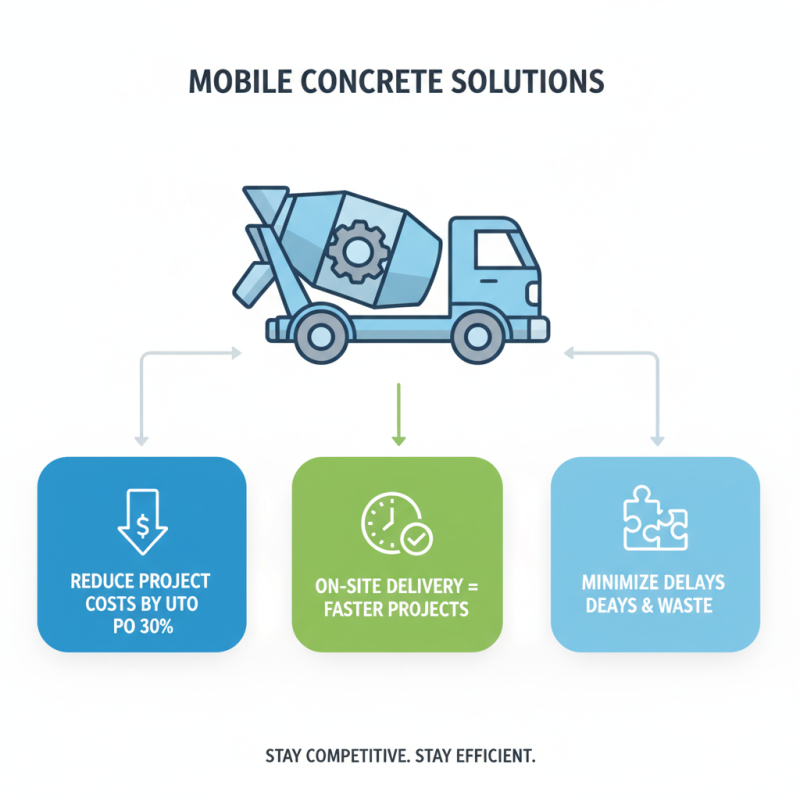
Mobile concrete solutions are gaining traction in the construction industry. According to a recent report, mobile concrete mixers can reduce project costs by up to 30%. This is crucial for businesses striving to stay competitive. The ability to deliver concrete on-site ensures projects stay on schedule, minimizing delays and wasted resources.
Job sites often face unique challenges. A flexible mobile solution can adapt to changes, such as unforeseen site conditions. For example, more than 25% of delays in construction are linked to material delivery issues. Mobile mixers tackle this by bringing the concrete to the location. However, using mobile solutions requires careful planning. Not all sites can accommodate large equipment or vehicles, which may affect accessibility.
Moreover, the environmental impact of concrete production is a growing concern. Mobile solutions can help mitigate this by reducing transportation emissions. Yet, they still contribute to carbon output. Ensuring efficient use, such as optimizing batch sizes, can lead to better sustainability outcomes. This nuance highlights the importance of continuous improvement in mobile concrete practices.
Mobile concrete equipment is revolutionizing construction efficiency. According to a recent industry report, mobile concrete mixers can reduce delivery times by up to 30%. This speed allows for timely project completion. However, operators must consider the maintenance of this equipment carefully. A breakdown can delay crucial work.
In terms of variety, mobile solutions range from mixers to pumps. Some models are compact, suitable for tight urban spaces. Others can mix large quantities efficiently. Yet, not all equipment performs equally under different conditions. Environmental factors can significantly impact functionality. A study showed that 25% of projects faced delays due to equipment failure in challenging weather. Understanding the operational limits is vital.
Contractors should also note cost factors. Investment in high-quality mobile equipment might lead to significant savings over time. However, cheaper alternatives may seem appealing. Still, they often come with hidden costs. Poor performance can lead to extra labor and time issues. Thus, thorough research into equipment specifications and capabilities is essential for informed purchasing decisions.
| Model | Capacity (cu yd) | Weight (lbs) | Power Source | Price Range ($) | Key Features |
|---|---|---|---|---|---|
| Model A | 10 | 5000 | Diesel | 30,000 - 35,000 | Mobile, High Efficiency |
| Model B | 8 | 4500 | Gasoline | 25,000 - 30,000 | Easy Setup, Compact |
| Model C | 12 | 7000 | Electric | 35,000 - 40,000 | Eco-friendly, Quiet Operation |
| Model D | 9 | 5000 | Diesel | 28,000 - 32,000 | User-friendly, Versatile |
| Model E | 11 | 6000 | Gasoline | 32,000 - 37,000 | Robust Build, Portable |
Mobile concrete solutions have transformed modern construction practices. They provide flexibility and efficiency to projects large and small. Utilizing mobile concrete requires careful planning and execution. Start by assessing your site’s conditions and space. A clear layout maximizes productivity and reduces delays. Ensure that all necessary equipment is within reach to prevent workflow interruptions.
Proper mixing is crucial. Consistency ensures high-quality results. During operations, monitor the mixing process closely. Inconsistent mixes can lead to structural issues. Additionally, communication among team members is key. Frequent updates keep everyone informed and on the same page. This minimizes mistakes and enhances safety on site.
Mobile concrete solutions can sometimes present challenges. Weather can impact the curing process. If conditions are not ideal, it may take longer for concrete to set. Always be prepared for adjustments. Review methods and adapt as necessary. Reflecting on past projects helps identify areas for improvement. Embrace the learning process, as it leads to better outcomes in future endeavors.