If you are interested in financing to fund your Bay-Lynx purchase, we recommend that you connect with Easylease Corp., a Canadian-based leasing and finance company that offers premier equipment leasing and financial services. They are focused on making it easier than ever before for companies to overcome cash flow and resource constraints to acquire the assets they need to grow their business.
Leasing through Easylease Corp. can offer several benefits:
Click here for your Canadian instant lease quote >>
For US customers, Click here for your instant lease application >>
Choosing the right cement mixer truck is crucial for your construction project. A cement mixer truck plays a vital role in transporting concrete efficiently. With various models available, selecting the right one can be challenging.
Consider your project's size and requirements. A smaller truck may suit residential jobs, while larger projects need advanced models. Pay attention to the mixer’s capacity and design. It's essential to evaluate if the truck's features match your needs. Some trucks are more efficient than others, which can affect your budget.
Not all cement mixer trucks are equal. Some may not perform well on rough terrain. Others might require more maintenance than expected. Take time to assess the reliability and performance of different models. Reflecting on these details will help you choose wisely.
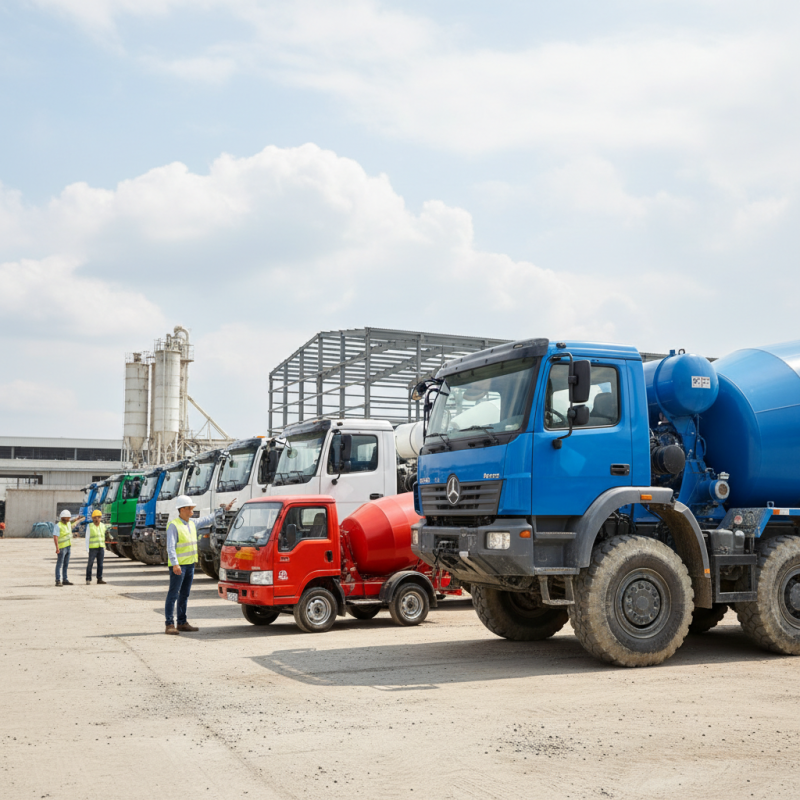
When selecting a cement mixer truck, it's crucial to understand the variety of options available. Generally, there are two main types: rear discharge and front discharge trucks. Rear discharge trucks are the most common. They deliver concrete through a chute at the back. This type suits most construction sites. It allows better visibility for the driver.
Front discharge trucks offer enhanced control. They allow operators to manipulate the flow of concrete from the front. This is particularly useful in tight spaces. According to industry reports, front discharge mixers are gaining popularity. They account for nearly 30% of the market. However, they require more skilled operators due to their complexity.
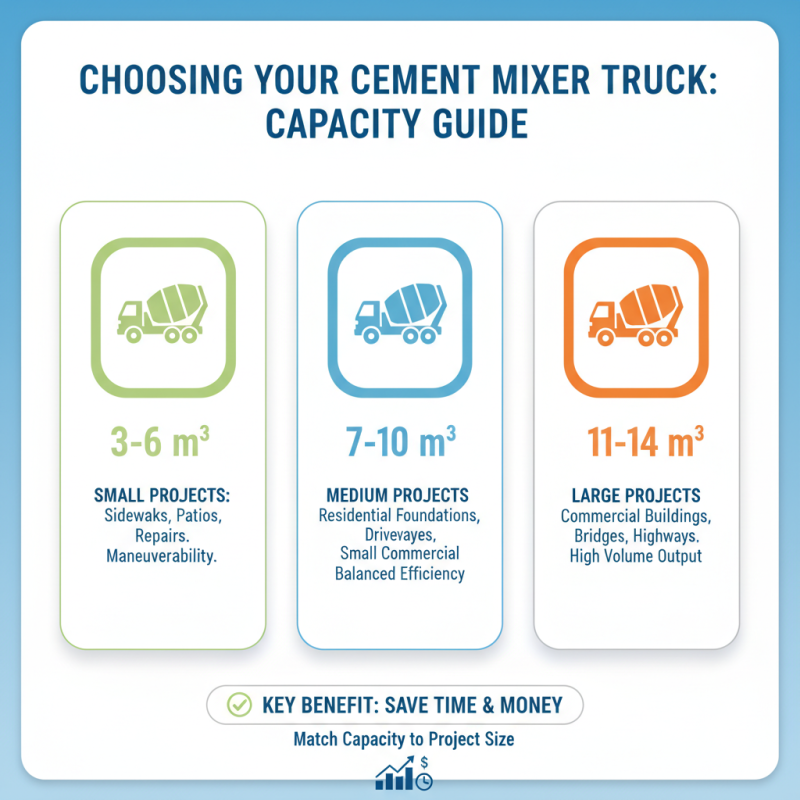
Additionally, size and capacity matter significantly. Typical mixer sizes range from 6 to 14 cubic meters. Larger capacities are ideal for big projects. However, smaller, nimble models can access congested areas. A report by the National Ready Mixed Concrete Association shows a trend toward versatile designs. Companies often prioritize flexibility over sheer capacity. It's important to assess the specific requirements before making a choice.
| Truck Type | Capacity (Cubic Yards) | Engine Power (HP) | Average Weight (lbs) | Typical Use |
|---|---|---|---|---|
| Standard Mixer | 8-10 | 250-350 | 25,000 | Residential and Commercial |
| Mini Mixer | 2-4 | 120-150 | 10,000 | Small Projects |
| Volumetric Mixer | 10-12 | 300-400 | 30,000 | On-site Mixing |
| Towable Mixer | 4-6 | 80-100 | 5,000 | Mobile Applications |
| Heavy Duty Mixer | 12-14 | 400-500 | 35,000 | Large Construction Projects |
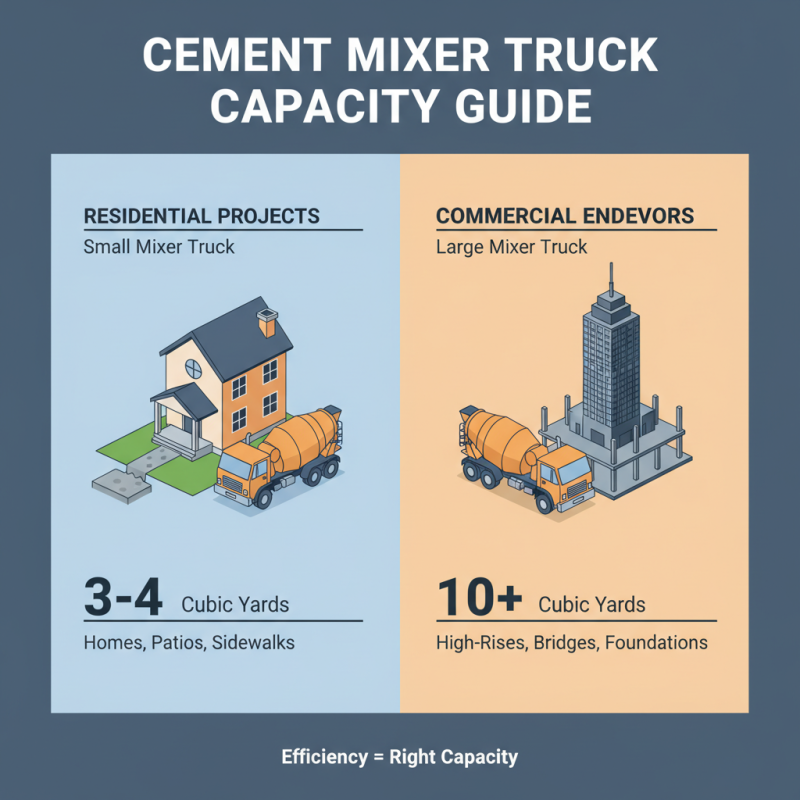
When selecting a cement mixer truck, capacity requirements are crucial. Whether you are working on residential projects or large commercial endeavors, capacity will dictate efficiency. A small mixer truck typically holds around 3 to 4 cubic yards of concrete, suitable for homes. On larger job sites, a truck with a capacity of 10 cubic yards or more is often necessary.
Understanding your project's demand is essential. Consider how many tons of materials you’ll need. If a project requires continuous pouring, a larger truck can save time. However, if your needs fluctuate, a smaller truck might suffice. Balancing between overcapacity and undercapacity can be tricky. You might find yourself waiting for the next load or, conversely, struggling with leftover concrete.
Reflect on past experiences. Did you face delays due to truck size? Were you left with excess material that went to waste? These reflections can guide your decision, ensuring that you choose a truck that matches your specific needs without overcommitting. Always assess the situation carefully and adjust your capacity requirements accordingly.
Choosing the right cement mixer truck involves understanding various features and specifications. One crucial aspect is the truck's capacity. Most mixer trucks range from 3 to 14 cubic meters. Depending on your project size, the right capacity can save time and money. A truck with a larger drum may seem efficient but can be cumbersome for smaller jobs.
Pay attention to the material quality of the truck. Higher quality builds ensure durability and longevity. Look for trucks that use high-strength steel. This enhances resistance against wear and tear. Safety features are also essential. Ensure the mixer is equipped with proper braking systems and stability controls. These can prevent accidents on rough terrains.
Before you make a decision, identify your specific needs. Will you be mixing large quantities daily? Or will it be for occasional smaller jobs? Clarifying your requirements will help narrow down your options. Remember, a more expensive truck doesn’t always mean better performance. It is crucial to align the features with your practical needs. Test-driving the truck before purchase can also reveal potential issues in maneuverability and overall ease of use.
When choosing a cement mixer truck, budgeting is crucial. Costs can vary substantially based on size, capacity, and features. Industry reports indicate that the average price range for a new mixer truck is between $100,000 and $200,000. This figure can escalate if you opt for advanced technology and higher capacity models. Always be prepared to assess your project's scale and frequency of use.
Consider maintenance costs as well. Many buyers overlook this aspect, but it plays a significant role in long-term budgeting. A well-maintained mixer truck can save you up to 15% on operating costs annually. Conversely, poor maintenance may lead to repair costs that exceed your initial investment. It's essential to factor in these recurring expenses when making a decision.
Another critical factor is financing options. Most buyers will require loans to purchase a mixer truck. Interest rates can significantly affect your budget. On average, financing can add 5% to 10% to the total cost. Be sure to evaluate different financing avenues to find the best deal. In doing so, you will minimize your risks and ensuring your investment aligns with your financial goals.
When selecting a cement mixer truck, maintenance and support options are crucial for long-term reliability. Regular maintenance is vital. A study found that nearly 30% of mixer truck downtime is attributed to insufficient maintenance. Scheduled inspections help identify wear and tear early. Every month, check key components like drums and engines to prevent major issues.
Consider aftermarket support as well. Some trucks come with enhanced support packages, while others do not. Research shows that trucks with comprehensive support can have their lifespan increased by over 15%. Understanding these options can make a significant impact on operational costs. Truck operators should also be aware of common repair scenarios. Misalignment in drum rotation is frequent and can affect mixing quality.
Additionally, not all service providers offer the same quality of support. Reliability is essential when choosing partners for maintenance. Poor service responses can prolong downtime, affecting project timelines. Feedback from operators reveals that timely support is often lacking. This reinforces the need for diligent research before purchase. Investing time in understanding maintenance plans pays off in the long run.