Financing

If you are interested in financing to fund your Bay-Lynx purchase, we recommend that you connect with Easylease Corp., a Canadian-based leasing and finance company that offers premier equipment leasing and financial services. They are focused on making it easier than ever before for companies to overcome cash flow and resource constraints to acquire the assets they need to grow their business.

Leasing through Easylease Corp. can offer several benefits:

  • Conserve Cash Leasing
  • 100% Financing
  • No Pre-Payment of Taxes
  • Preserve Lines of Credit
  • Potential Income Tax Benefits
  • Pay as You Profit
  • Match Revenue with Expenditures
  • Simple, Convenient Process
  • Tailored Payments

Click here for your Canadian instant lease quote >>

For US customers, Click here for your instant lease application >>

China Top 10 Concrete Lorry Manufacturers for Global Buyers

Choosing a concrete lorry for international projects involves more than comparing prices and engine power. Buyers must examine drum capacity, chassis strength, discharge speed, fuel use, maintenance access, and local service support. A polished brochure can hide practical weaknesses. Ask for test records, component brands, delivery evidence, and references from similar climates.

Brian McCarthy, a longtime concrete industry specialist associated with the National Ready Mixed Concrete Association, once stated, “Concrete is the most widely used construction material in the world.” That reality raises the standard for transport equipment. A reliable concrete lorry must protect mix consistency from the batching plant to the jobsite. It should handle narrow urban roads, steep construction routes, heat, dust, and long working hours without unnecessary downtime.

This guide reviews China’s top ten concrete lorry manufacturers for global buyers. The comparison considers manufacturing experience, product range, export capability, customization, after-sales service, and reported operating performance. Some manufacturers offer strong value through competitive pricing and flexible specifications. Others stand out through larger production networks or stronger technology partnerships.

No ranking is perfect. Buyer priorities differ.

A fleet contractor may prefer simple maintenance. A major infrastructure project may require advanced controls, larger drums, and strict delivery schedules. Even experienced buyers can overlook spare-parts availability or technician training. These details matter later, often when the truck is already working far from its supplier.

The manufacturers below deserve careful evaluation, not blind trust. Confirm every specification before signing. Field performance remains the final test.
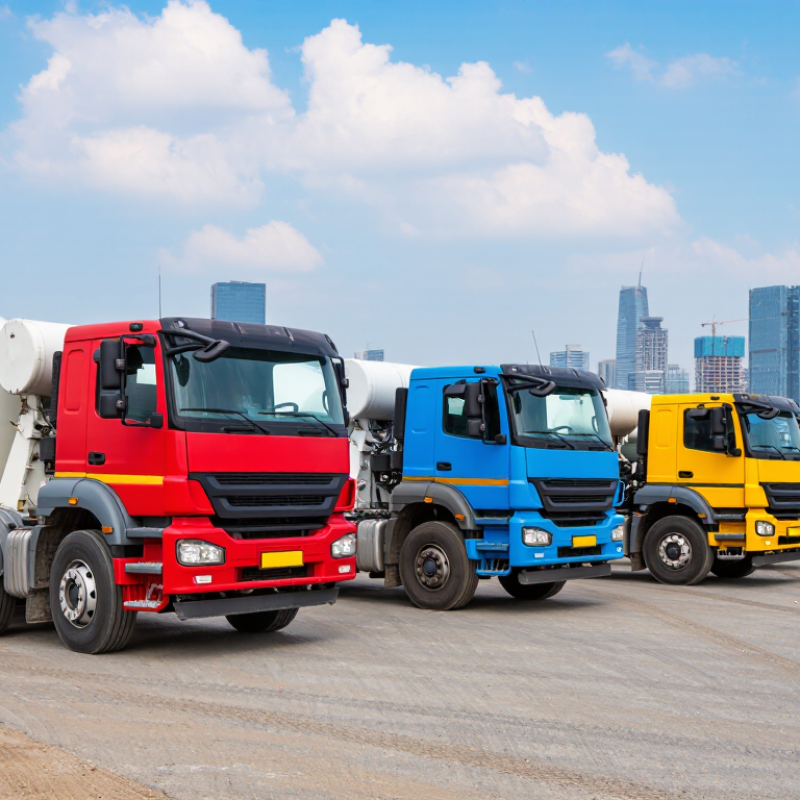
China Top 10 Concrete Lorry Manufacturers for Global Buyers

What Concrete Lorries Are and Why Global Buyers Need Them

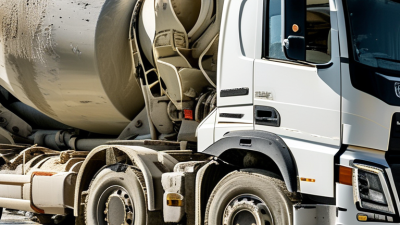
Concrete lorries, often called transit mixers, carry fresh concrete from a batching plant to a construction site. Their rotating drums keep cement, aggregate, water, and admixtures moving during transit. This helps limit segregation and maintains a workable mixture. It cannot fix poor batching. That distinction matters. Most units include a hydraulic drive, discharge chute, water system, and washout controls. These parts affect placement speed, cleanliness, and daily reliability.

Global buyers need these vehicles because concrete has a limited working window. Heat, traffic, and long distances can reduce slump before placement. A suitable lorry supports foundations, bridges, roads, tunnels, and high-rise slabs. Buyers should check drum capacity, discharge speed, chute reach, axle limits, and turning radius. Left-hand or right-hand traffic also changes the practical configuration. In hot climates, insulation and water management may protect productivity. Small specifications matter.

Professional purchasing requires more than a competitive quotation. For Chinese suppliers, buyers should review test reports, maintenance access, emission compliance, spare-part planning, and operator training. Factory inspection can reveal weld quality, hydraulic routing, safety guards, and finish consistency. Yet documents do not predict every jobsite problem. Muddy roads, queueing, or inconsistent batching may still reduce output. I would question any promise based only on maximum capacity. A larger drum is not always better for narrow roads or weak bridges. Lifecycle cost, service response, and local regulations deserve equal attention.

China Top 10 Concrete Lorry Manufacturers for Global Buyers - What Concrete Lorries Are and Why Global Buyers Need Them
No. Concrete Lorry Configuration Typical Nominal Drum Capacity Typical Discharge Output Common Drive Configuration Best-Suited Application Why Global Buyers Need It
1 Compact urban mixer 2–4 m³ 1–3 m³/h 4×2 or 4×4 Residential projects, narrow streets and small construction sites Provides concrete delivery where full-size mixer trucks cannot easily access the site.
2 Standard construction mixer 6–8 m³ 3–5 m³/h 6×4 Housing developments, commercial buildings and general infrastructure Offers a practical balance between payload, operating cost and delivery capacity.
3 Heavy-duty mixer 8–12 m³ 4–7 m³/h 8×4 Large foundations, bridges, roads and high-volume concrete placement Reduces the number of delivery cycles required for major pours.
4 All-wheel-drive mixer 4–8 m³ 2–5 m³/h 4×4, 6×6 or 8×8 Mountainous, muddy, unpaved or weak-ground construction sites Improves traction and mobility in areas where conventional road trucks may struggle.
5 High-clearance mixer 6–10 m³ 3–6 m³/h 6×4 or 6×6 Mining areas, remote infrastructure and uneven terrain Provides better underbody clearance and durability for demanding operating conditions.
6 Low-profile mixer 3–7 m³ 2–5 m³/h 4×2 or 6×4 Underground construction, tunnels, industrial plants and sites with height limits Helps transport and discharge concrete in locations with restricted vertical clearance.
7 Transit mixer with extended discharge chute 6–10 m³ 3–6 m³/h 6×4 or 8×4 Sites where the truck cannot position directly beside the placement area Extends the practical discharge reach without requiring a separate small conveying system.
8 Self-loading concrete mixer 1–5 m³ 1–4 m³/h 4×4 or 6×6 Remote projects with limited access to ready-mix supply chains Can load, mix, transport and discharge concrete with fewer supporting machines.
9 Corrosion-resistant mixer 6–10 m³ 3–6 m³/h 6×4 or 8×4 Coastal regions, humid climates and projects using aggressive concrete materials Protective materials and suitable maintenance practices can help extend equipment service life.
10 Export-oriented modular mixer 4–12 m³ 2–7 m³/h Selected according to local road regulations International projects requiring adaptation to local chassis, axle-load and safety rules Supports regional customization for payload limits, steering position, emissions and service requirements.
Buyer reference: Concrete lorry capacity and output vary according to drum design, concrete slump, road regulations, axle limits, chassis configuration and discharge conditions. A concrete lorry is a truck-mounted rotating-drum vehicle used to agitate, transport and discharge fresh concrete while helping reduce segregation during delivery.

How China’s Concrete Lorry Manufacturing Industry Is Organized

China’s concrete lorry industry is organized as a layered manufacturing network, not a single factory model. Vehicle integrators assemble the cab, mixer drum, hydraulic system, and control equipment. Specialized suppliers produce steel tanks, drive units, pumps, valves, axles, and electronic components. Regional production bases often concentrate these suppliers around major transport corridors. This shortens delivery routes and improves production efficiency.

For global buyers, supplier capability requires closer inspection. A credible manufacturer should provide material certificates, welding procedures, drum balance records, and hydraulic pressure test results. Factory audits should examine steel cutting, welding accuracy, paint preparation, and final road testing. A clean showroom is useful, but it proves little. Ask to see completed units and maintenance records. Export teams also need experience with destination-country chassis rules, lighting requirements, axle limits, and import documents.

The industry is efficient, but not flawless. Some factories depend heavily on outside component suppliers, creating inconsistent replacement quality. A small mismatch between the mixer drum and hydraulic motor can increase fuel use or shorten service life. Buyers should confirm component origins, warranty boundaries, spare-parts availability, and technician response times before signing contracts. Field checks matter. A short video of drum rotation cannot replace a loaded test, brake inspection, and leak check. Direct communication with engineers often reveals more than polished sales material.

Top 10 Chinese Concrete Lorry Manufacturers and Their Key Products

China’s top 10 concrete lorry manufacturers serve different construction needs, from urban housing to large infrastructure projects. Their key products commonly include transit mixer trucks, concrete pump trucks, trailer pumps, batching plants, and spare parts. Mixer trucks often range from 6 to 16 cubic meters, with reinforced drums for long-distance delivery. Pump trucks may offer boom lengths from 28 to 52 meters, depending on site access and building height.

A reliable manufacturer should provide test records, clear load ratings, and practical maintenance guidance. Export experience also matters. Check whether the producer understands your road regulations, climate, and fuel standards. The “top ten” label can mislead, because one supplier may excel in heavy-duty pumps while another focuses on compact mixers. No factory fits every project. That is worth admitting.

Tips: Compare drum capacity, axle design, hydraulic parts, warranty response, and local service support. Request videos of factory testing and inspect weld quality around the frame. Ask for a parts list before payment. Small details matter. Also review delivery schedules carefully; port delays and missing documents can disrupt a concrete pour. Personally, I would value transparent communication over the lowest quotation, although budget pressure sometimes makes that difficult. Check the final configuration twice.

How to Compare Manufacturers by Quality, Capacity, and Export Support

China Top 10 Concrete Lorry Manufacturers for Global Buyers

Comparing China’s leading concrete lorry manufacturers requires more than checking production photos. Quality begins with steel thickness, welding consistency, drum balance, and hydraulic system protection. Ask for material certificates, inspection records, and test videos from recent units. A reliable manufacturer should explain its quality process clearly, not only promise “high quality.”

Capacity also needs careful measurement. Check monthly output, mixer volume, chassis options, and delivery schedules. A factory producing hundreds of units monthly may offer better continuity, but volume alone does not prove precision. Inspect drum rotation, discharge speed, water tank design, and access to replacement parts. Small details matter. Request a sample packing plan and confirm whether export documents match your destination’s requirements.

Tips: Compare at least three quotations using the same specifications. Review factory audit photos, weld reports, warranty terms, spare-parts lists, and loading procedures. Confirm port experience and communication after payment. A low price may look attractive, yet it can hide thinner steel or limited support. This is easy to miss. I would also test one unit before placing a large order, although that adds time and cost. Perfect comparisons are rarely possible, so record every assumption and question before signing.

How Global Buyers Can Evaluate Suppliers and Place Orders

Global buyers should evaluate concrete lorry suppliers beyond catalog photos and quoted prices. Request legal company details, factory address, production capacity, and export references. A video call helps, but an independent factory audit is stronger. Check welding areas, paint thickness, chassis alignment, and final water testing. Ask for dated inspection records. Small details matter.

Technical comparison should match your working conditions. Confirm drum volume, mixing speed, discharge reach, axle limits, engine configuration, and local road compliance. Review material grades for the drum, hopper, and hydraulic lines. Request test reports, manuals, spare-parts lists, and warranty terms in writing. Ask who handles remote diagnosis and service training. A low offer may hide costly downtime. It often does.

Before ordering, approve a precise specification sheet with drawings, tolerances, colors, accessories, and delivery milestones. Define inspection points before loading, including empty weight, drum rotation, leakage, lights, and emergency controls. Use a secure payment schedule tied to verified progress, not promises. Confirm Incoterms, shipping plans, insurance, customs documents, and destination unloading needs. Pre-shipment inspection is worth the fee. Still, no checklist catches everything. Allow a contingency for delays, replacement parts, and specification misunderstandings. That is not pessimism; it is practical purchasing discipline.